PFAS in Tap Water: What Parents Over 35 Need to Know
This article contains affiliate links. If you purchase through one of these links, we may earn a commission at no extra cost to you. We only recommend products we believe in based on our own research and testing.
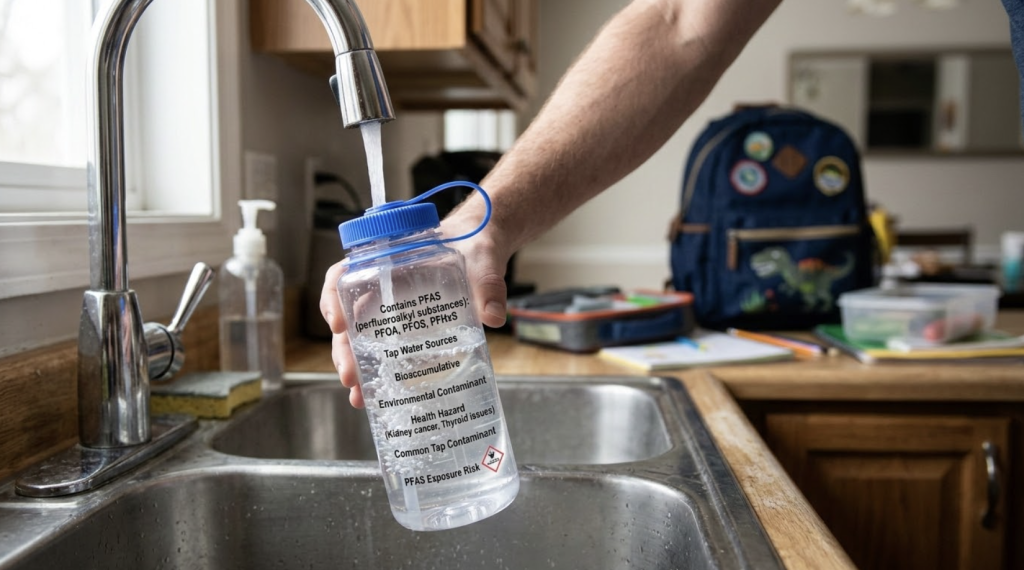
PFAS in tap water is not something most parents were tracking a year ago, but it is worth adding to the list now. You already worry about enough. Screen time, sunscreen, what’s actually in the snacks in the pantry.
If you read our breakdown of the EPA’s 2026 PFAS rollback, you already know the basics. This article is about what it actually means for your kids specifically, and what is worth doing something about versus what you can let go of. For more on how our family approaches everyday health decisions like this one, you can also browse the rest of Your First 10.
Kids are not just smaller versions of adults when it comes to chemical exposure. Their bodies are still developing, they drink more water relative to their body weight, and early exposure has a longer runway to matter over a lifetime. That is the part worth paying attention to here.
Key Takeaways
- 176 million Americans now have PFAS in their tap water, and kids process it differently than adults
- Kids drink more water relative to body weight, making exposure hit harder per pound
- Boiling water does not remove PFAS. It actually concentrates them, since the chemicals don’t evaporate
- Reverse osmosis is the most consistently effective home filtration method for families with kids
Why Kids Are More Vulnerable to PFAS
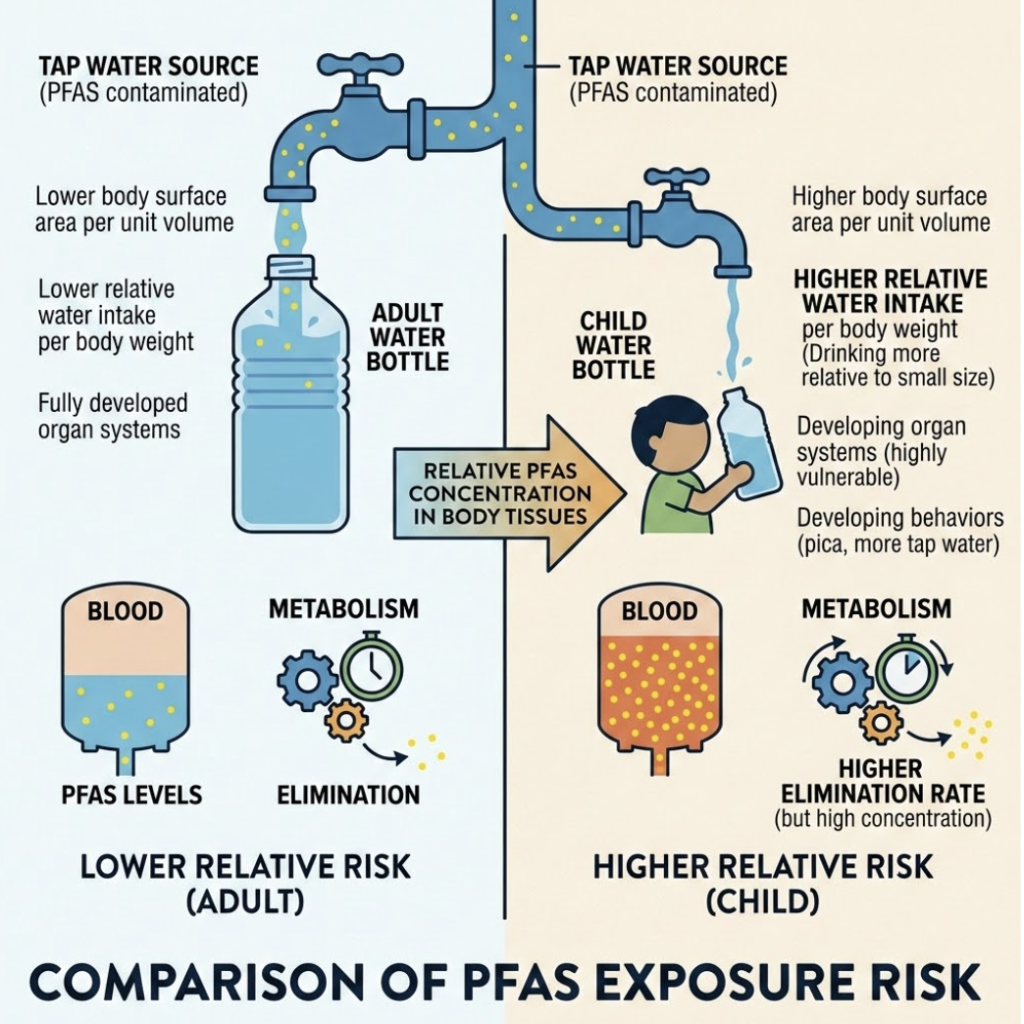
Adults and kids do not process PFAS the same way, and the difference matters more than most people realize.
They drink more relative to their size. A child’s body weight is much lower than an adult’s, but their water intake relative to that weight is often higher, especially in warmer months or during sports. That means a higher relative dose from the same glass of water.
Their organs are still developing. The liver, kidneys, and immune system are still maturing through childhood. Research compiled by the CDC’s Agency for Toxic Substances and Disease Registry points to immune effects in children as one of the more consistent findings across PFAS studies.
Exposure adds up over a longer runway. A chemical that does not break down easily has more time to accumulate in a body that started being exposed at age five instead of age thirty five. This is less about any single glass of water and more about total exposure over childhood and into adulthood.
None of this means panic is the right response. It means the choices you make now, testing your water or filtering it, have a longer payoff for your kids than they do for you.
What You Can Actually Do This Week
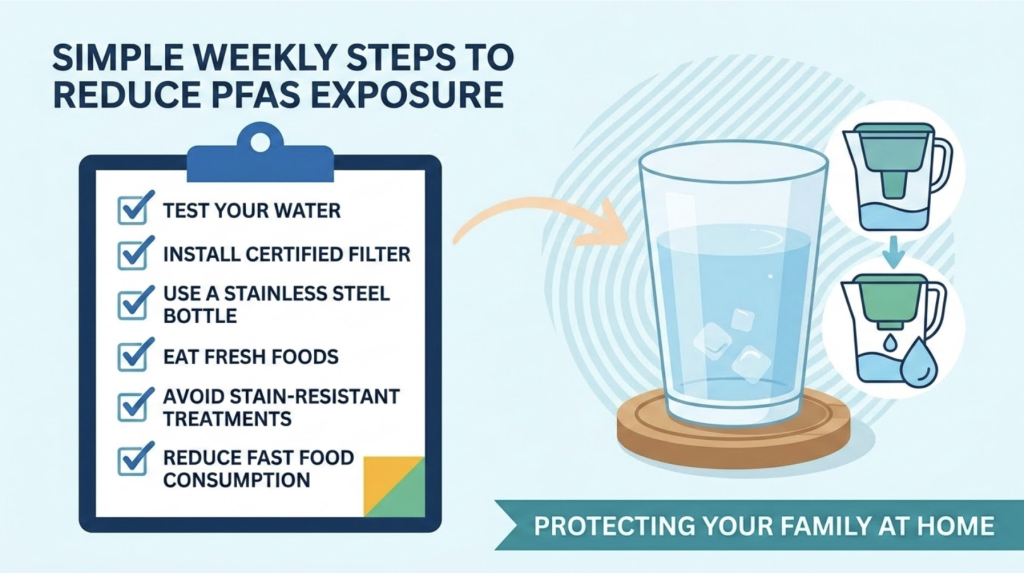
None of this requires an overhaul of your kitchen or your budget. Here are the steps that actually move the needle, starting with the easiest one.
1. Check your water utility’s Consumer Confidence Report. This takes about five minutes and tells you whether PFAS has already been detected in your area. If you missed this step, it’s covered in more detail in our EPA rollback breakdown.
2. Swap your kid’s water bottle habits, not their water. If you’re on bottled water for now while you figure out a filtration plan, stick to a consistent brand rather than switching often, since PFAS levels vary by source and manufacturer.
3. Prioritize the tap your kids drink from most. You don’t need a whole house system to start. A filter on your kitchen sink or a countertop unit covers drinking and cooking water, which is where exposure actually matters most.
4. Know what to look for in a filter. Not every filter removes PFAS. Reverse osmosis is the most consistently effective method for households with kids, since it physically blocks PFAS molecules rather than relying on a surface that wears out over time. I go through this in more detail, including what worked for our family, in my AquaTru Carafe review.
Small, consistent changes here matter more than one big purchase. Start with the utility report, then decide from there.
Signs Your Family’s Water Might Be a Bigger Risk
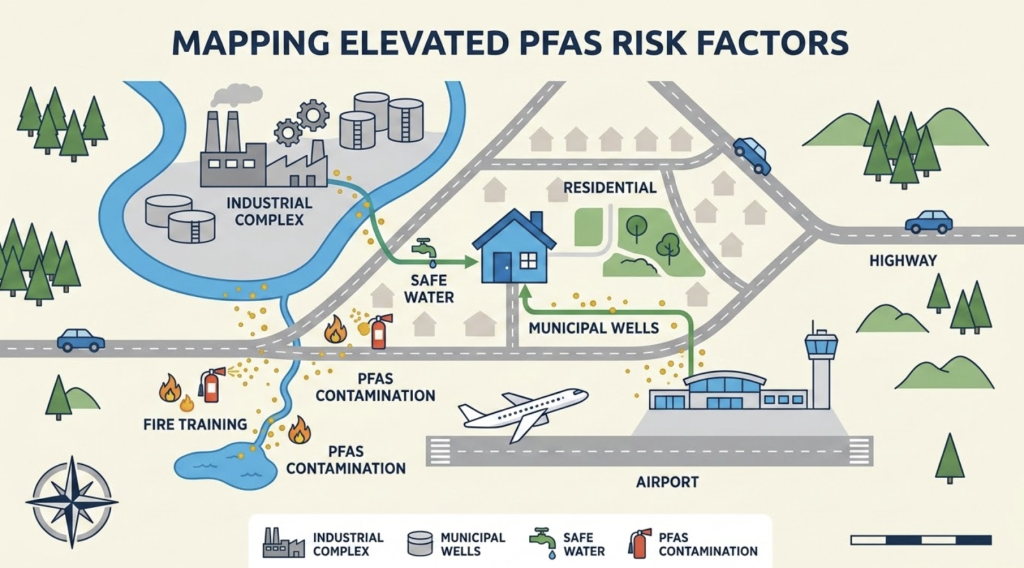
Not every household faces the same level of risk. A few factors tend to push PFAS levels higher, and they’re worth checking against your own situation.
Proximity to an airport, military base, or industrial site. Firefighting foam used in training exercises for decades is one of the most common sources of PFAS contamination in nearby groundwater.
Private well water. Wells are never covered by EPA drinking water rules, so if you’re on one, no one is testing it for you. That responsibility sits entirely with your household.
Older infrastructure or a smaller local utility. Smaller systems sometimes have less funding for the testing and treatment upgrades larger cities have already made.
If none of these apply to you, that’s genuinely good news, but it doesn’t mean your risk is zero. At least 45 percent of tap water nationwide contains some level of PFAS, regardless of neighborhood.
What to Do If You Just Found Out Your Water Tests High

If your utility report or a test kit just confirmed PFAS above the EPA limit, take a breath first. This is a fixable problem, not an emergency.
Don’t panic about past exposure. You can’t undo water your family has already had. What matters now is what happens going forward, and PFAS levels in the body do decrease over time once exposure stops.
Prioritize the kitchen tap first. You don’t need to solve every faucet in the house on day one. Cover drinking and cooking water first with a countertop or under-sink filter, since that’s where the bulk of ingestion happens.
Choose reverse osmosis if your numbers are high. For elevated PFAS readings specifically, reverse osmosis has the strongest track record of the three EPA-recognized removal methods, since it physically blocks the molecules rather than relying on adsorption. This is the approach I went with for my own family, and I walked through exactly what that looked like in my AquaTru Carafe review.
Retest after your filter is installed. A follow-up test, even a basic one, confirms the filter is actually doing its job rather than just assuming it is.
One high test result is not a crisis. It’s information, and now you have a clear next step instead of an open question.
Bottom Line
You can’t control what happens with federal PFAS regulations, and you can’t control what was already in the ground before your family moved in. What you can control is what your kids drink today.
Start with your utility’s water quality report, decide whether testing makes sense for your situation, and know that a good filter is one of the most effective things you can do as a parent on this particular issue.
Frequently Asked Questions
Does boiling water remove PFAS?
No. Boiling does not remove PFAS, it actually concentrates them. Since PFAS don’t evaporate, as water boils off, the remaining water has a higher concentration of PFAS than before. Filtration is the only reliable removal method.
Are kids more sensitive to PFAS than adults?
Yes. Children drink more water relative to their body weight, their organs are still developing, and early exposure has more time to accumulate over a longer lifetime.
Should I switch to bottled water instead of tap?
Not necessarily. Bottled water is not automatically PFAS free, and independent testing has found PFAS in multiple bottled brands. A good home filter is usually a more reliable and more affordable long term solution.
Is my child’s school water fountain a concern?
It can be, since schools draw from the same municipal or well water your home does. If your home tap tests high for PFAS, the same is likely true at school unless the district has already installed filtration.
What is the single best first step for a parent to take?
Check your utility’s Consumer Confidence Report this week. It takes five minutes and tells you whether PFAS has already been detected in your area, which shapes every decision after that.
Related reading: Is Your Tap Water Safe in 2026? What the EPA’s PFAS Rollback Actually Means | Best Countertop Water Filter? AquaTru Carafe Review