AirDoctor 3500 Review: Best Air Purifier for Allergies?
This article contains affiliate links. If you purchase through one of these links, we may earn a commission at no extra cost to you. We only recommend products we believe in based on our own research and testing.
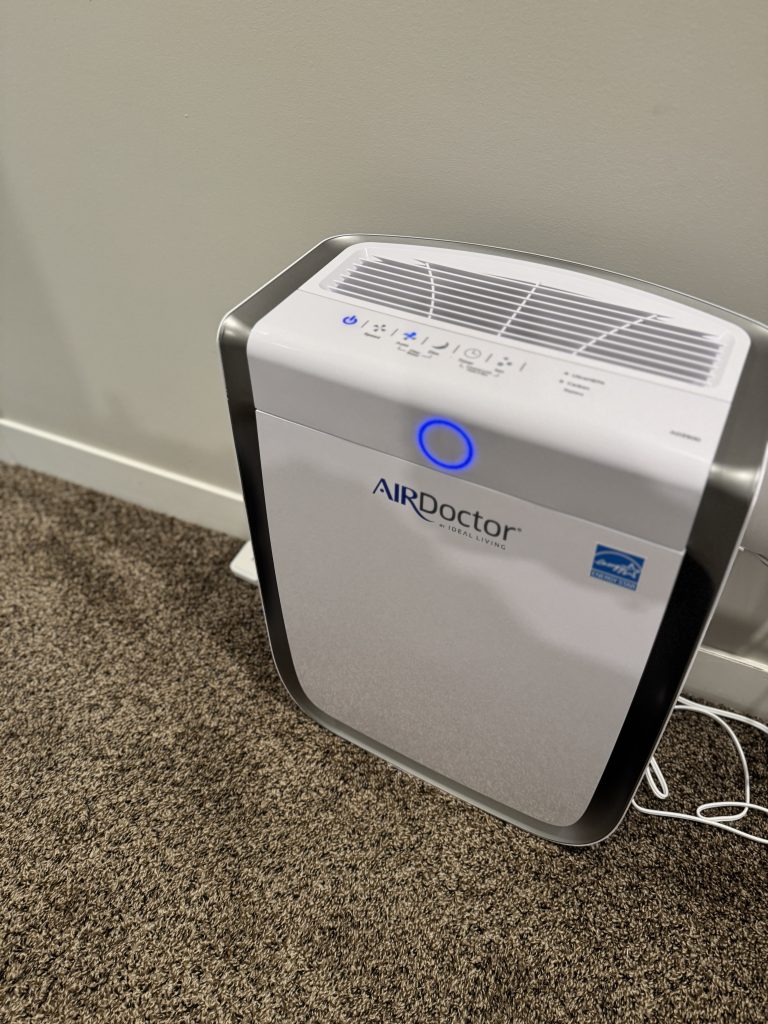
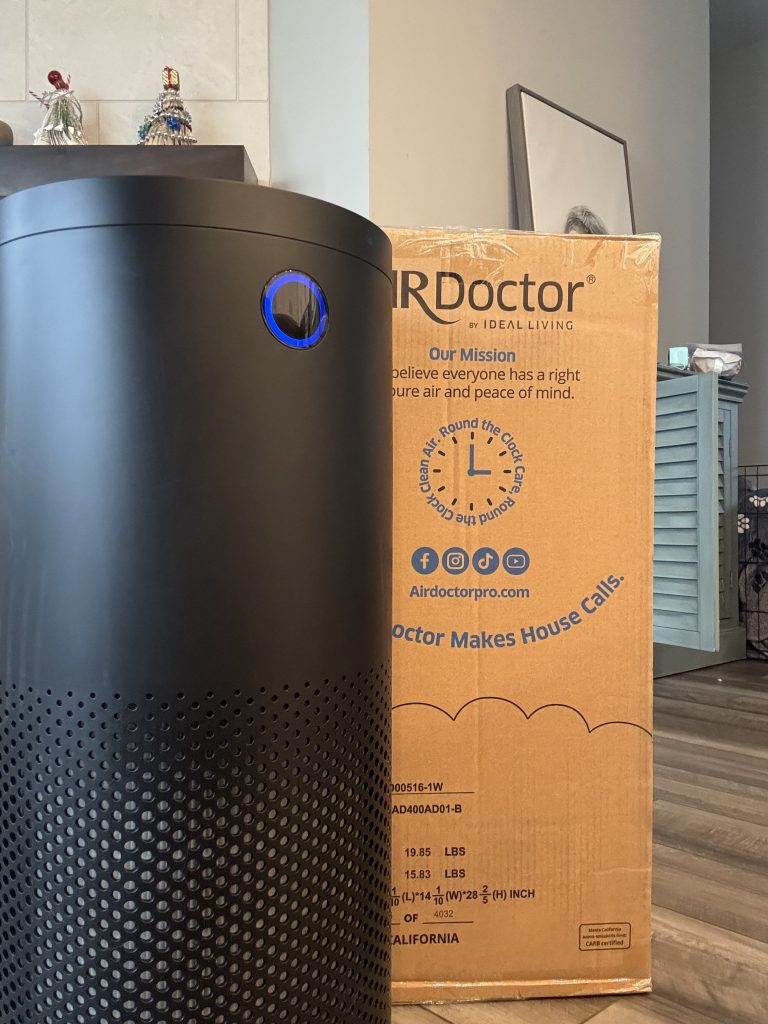
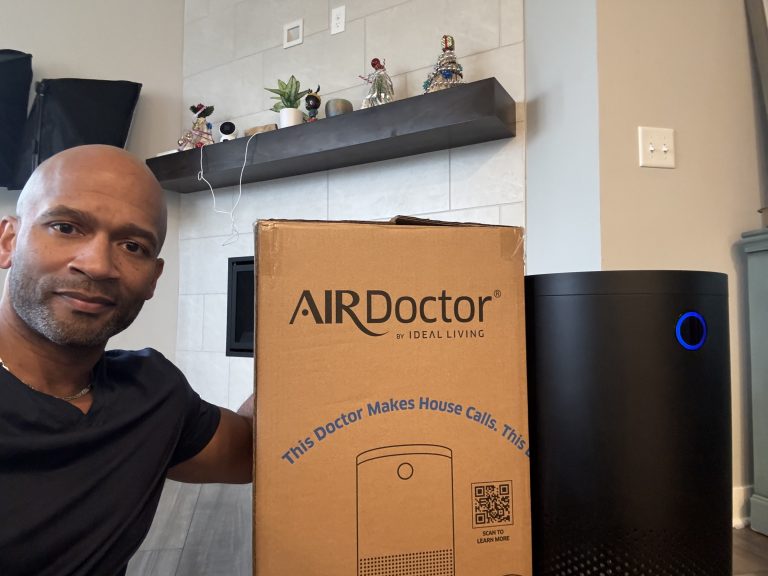
If you are dealing with seasonal allergies and feel like nothing is really helping, this AirDoctor 3500 review is written for you. I purchased the AirDoctor 3500 myself and have been using it through allergy season, and the difference in how I feel inside my home has been noticeable. This is not a paid partnership. It is an honest look at whether this air purifier is worth your money if allergies are the main reason you are shopping.
What Is the AirDoctor 3500?
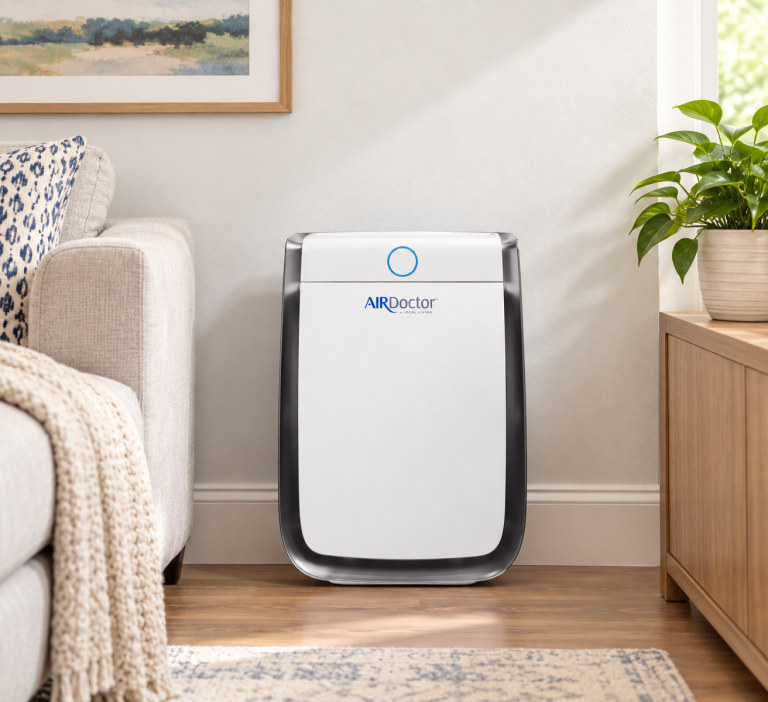
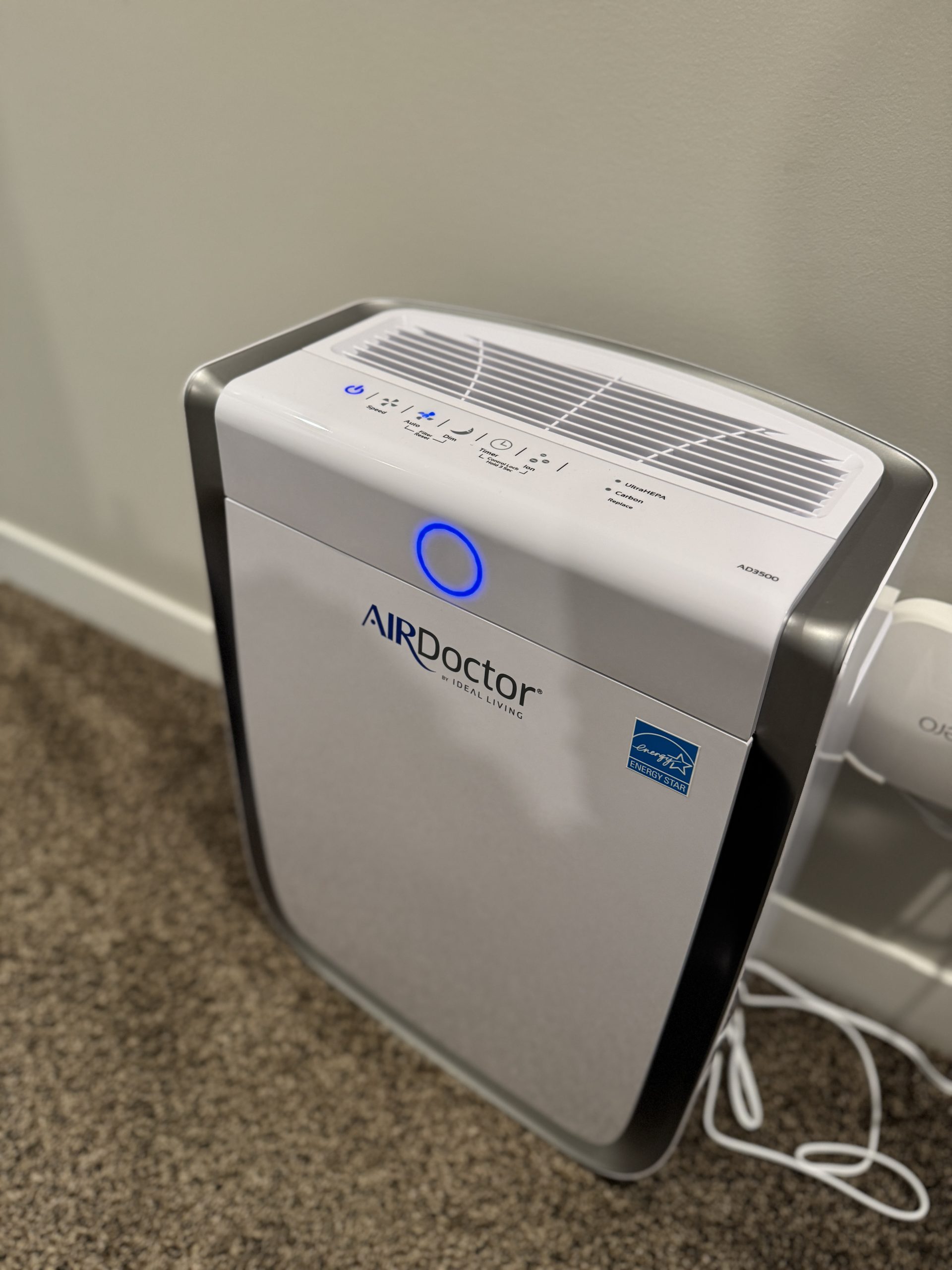
The AirDoctor 3500 is a professional-grade air purifier designed for medium to large rooms. It is built around a three-stage filtration system that works together to clean the air of both particles and gases, which is something a lot of cheaper purifiers skip entirely.
Here is what each filter does:
- Pre-filter catches the larger stuff first, like pet hair, dust, and lint, so the main filters do not get clogged as quickly.
- Carbon filter handles odors, gases, and VOCs (volatile organic compounds) like formaldehyde. This is the layer that helps with cooking smells, cleaning product fumes, and off-gassing from furniture.
- UltraHEPA filter is the heavy lifter. It captures 99.99% of airborne particles as small as 0.003 microns, which is 100 times smaller than the standard HEPA requirement. That includes pollen, mold spores, pet dander, bacteria, and some viruses.
For allergy sufferers, that combination of particle and gas filtration is what makes this unit stand out from basic single-filter purifiers.
What Size Room Does the AirDoctor 3500 Cover?
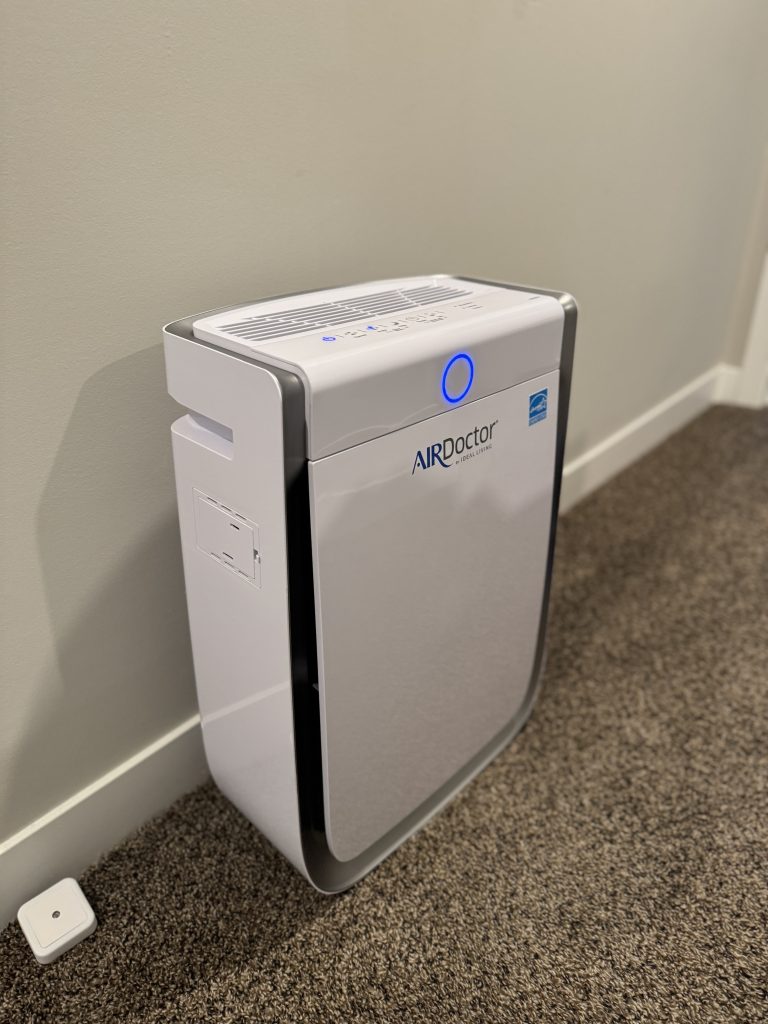
The AirDoctor 3500 is rated to cover 630 sq ft with 4 air changes per hour, or up to 1,260 sq ft with 2 air changes per hour. For allergy sufferers, 4 air changes per hour is the standard you want to aim for, so the 630 sq ft rating is the more practical number to plan around.
That makes it a solid fit for:
- Large bedrooms
- Living rooms
- Open kitchen and dining areas
- Home offices
I move mine between the living room and bedroom depending on where I am spending the most time. That flexibility is one of the things I appreciate most about it.
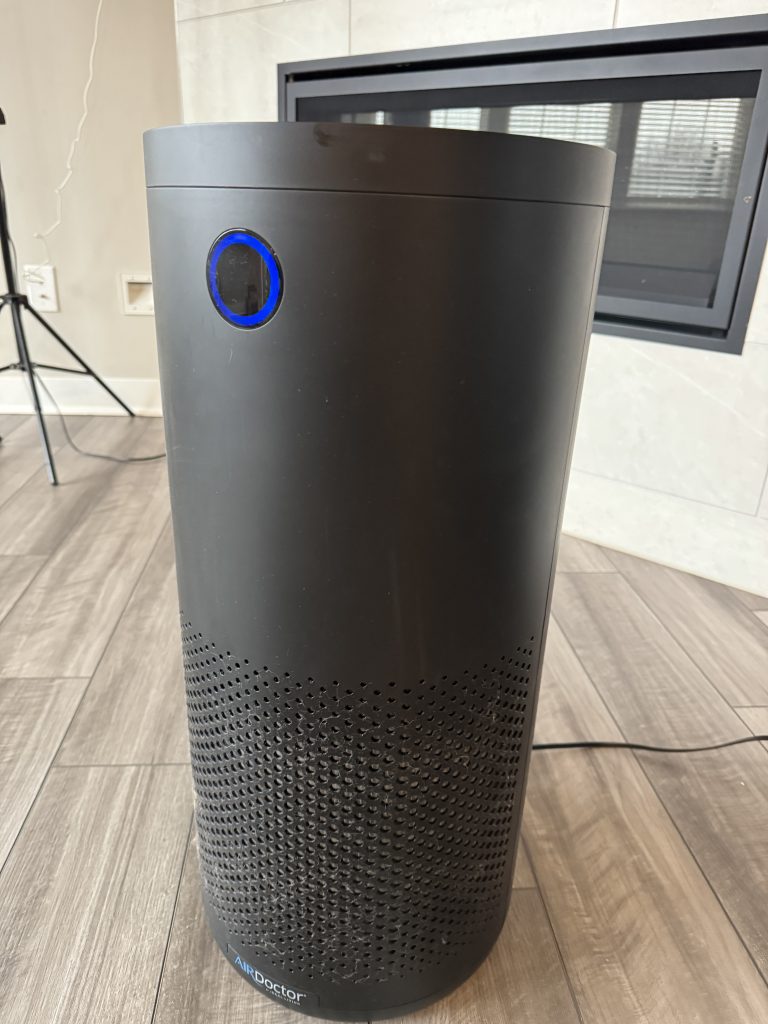
One thing worth knowing is that the AirDoctor 3500 runs on auto mode, which means it is constantly reading the air quality around it and adjusting the fan speed on its own. A blue light means the air quality is good. Orange means moderate. Red means it detected something and is working harder to clean it. You do not have to think about settings. You just let it run.
If you have a larger open-concept space or high ceilings, the coverage on the 3500 may fall short. In that case, the AirDoctor 4000 is worth looking at before you buy.
Does the AirDoctor 3500 Actually Help With Allergies?
This is the question most people are really asking, and it is the reason I bought this unit in the first place.
I started developing seasonal allergies as an adult after never dealing with them growing up. Itchy eyes, congestion, and that general foggy feeling became a regular part of my day during peak allergy season. I tried the usual things but nothing gave me consistent relief inside my own home.
After running the AirDoctor 3500 consistently, a few things changed:
- Allergy symptoms feel noticeably less severe when I am inside, especially in the morning after sleeping in the same room as the unit overnight.
- The air feels cleaner. That sounds vague, but if you live with allergies you know exactly what that difference feels like when you walk into a room.
- Pet dander has been much less of an issue. With two dogs in the house, this was a real concern going into the purchase.
I want to be straightforward here. I do not have professional air quality testing equipment, so I cannot give you before and after numbers. What I can tell you is that the improvement has been consistent enough that I would not go back to not having it.
If you are skeptical, that is fair. But for allergy sufferers who spend a lot of time indoors, having a unit that is actively pulling pollen, dander, and mold spores out of the air around the clock is hard to argue against.
Is the AirDoctor 3500 Loud? What Is It Like to Live With Daily?
This is one of the most common questions people ask before buying, and it is a fair one. Nobody wants a machine that sounds like a box fan running in the corner 24 hours a day.
On auto mode, the AirDoctor 3500 is genuinely quiet. It runs at around 30 to 40 decibels on its lower settings, which is roughly the level of a quiet library or soft background noise. I sleep with mine in the bedroom and it has never been disruptive.
When it detects something in the air and kicks into a higher fan speed, it does get louder. At its maximum setting it runs closer to 50 to 67 decibels, which is noticeable. But that higher speed is temporary. It runs hard for 15 to 30 seconds, cleans what it detected, and then settles back down on its own.
A few other things that make it easy to live with day to day:
- All lights can be fully dimmed, so there is no glow keeping you up at night.
- The unit is lightweight enough to move between rooms without any hassle.
- Auto mode means you never have to adjust settings manually. It handles itself.
For anyone who has tried a loud or disruptive air purifier in the past and gave up on it, the 3500 is a noticeably different experience.
Filter Replacement and Ongoing Costs
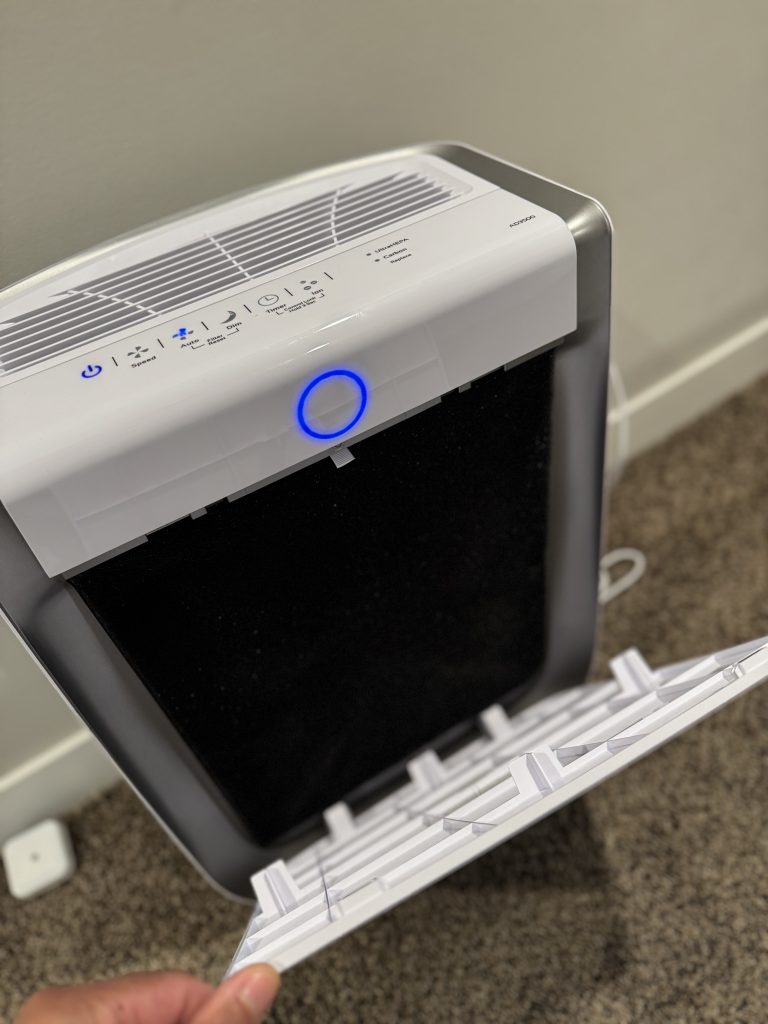
One thing worth knowing before you buy any air purifier is what it costs to maintain it. The unit price is only part of the picture.
For the AirDoctor 3500, filter replacement runs approximately $120 per year when buying through the AirDoctor website. That breaks down into:
- UltraHEPA filter: replaced every 8 to 12 months
- Carbon filter: replaced every 8 to 12 months
- Pre-filter: cleaned regularly with a vacuum and replaced as needed
The machine takes the guesswork out of timing. A light on the unit will tell you when a filter needs to be changed, so you are not trying to remember when you last replaced it.
To get more life out of your filters, vacuum the pre-filter once a month or so. It takes about two minutes and keeps the main filters from getting overloaded with larger particles too quickly.
After replacing a filter, you reset the indicator light by pressing the Auto and Dim buttons together for three seconds. The light will flash three times and turn off, confirming the reset is done.
For what you are getting in terms of filtration quality, $120 a year is a reasonable ongoing cost. That works out to about $10 a month for cleaner air around the clock, which for allergy sufferers is a pretty easy case to make.
AirDoctor 3500 Pros and Cons
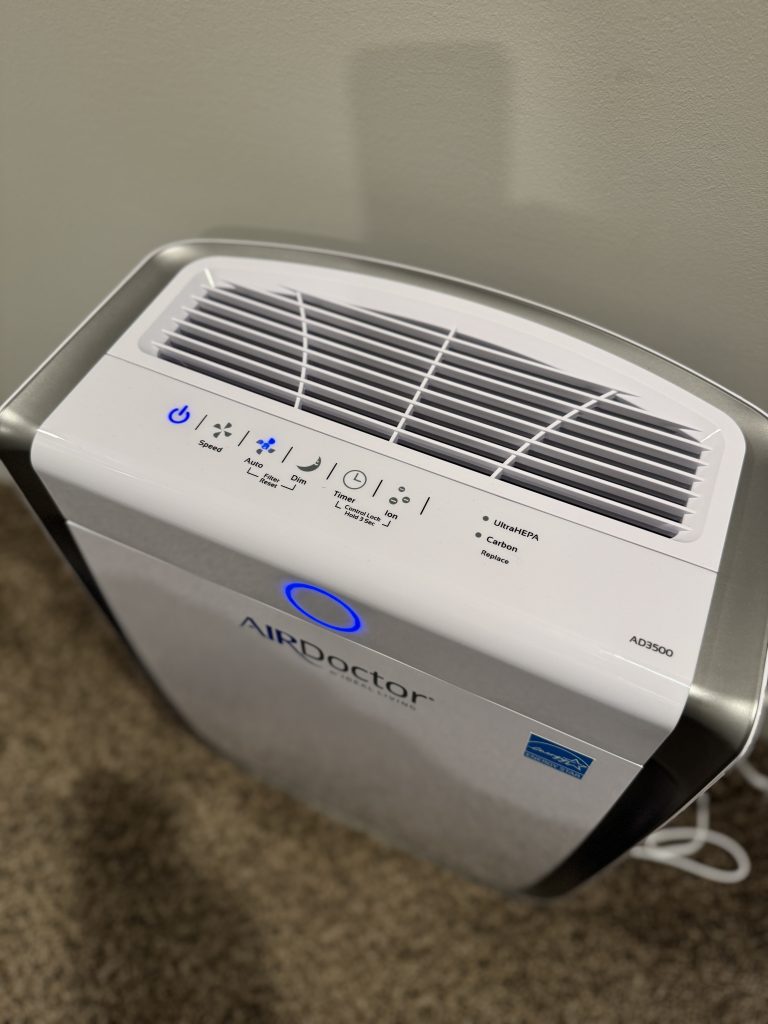
No air purifier is perfect for every situation. Here is an honest breakdown of what works well and what to keep in mind before you buy.
Pros
- Three-stage filtration covers both particles and gases, which most budget purifiers skip entirely.
- The UltraHEPA filter captures particles 100 times smaller than the standard HEPA requirement, which matters a lot for pollen and fine allergens.
- Auto mode adjusts fan speed on its own based on air quality, so there is nothing to manage.
- All lights can be fully dimmed, making it genuinely bedroom-friendly.
- The filter change indicator removes any guesswork from maintenance.
- Lightweight and easy to move between rooms as needed.
- Competitively priced compared to other professional-grade purifiers, especially with a discount link.
Cons
- Fan noise at the highest setting is noticeable, though it is temporary and settles back down quickly.
- Replacement filters are proprietary, meaning you have to buy directly from AirDoctor rather than shopping around for cheaper third-party options.
- The upfront cost may feel like a stretch if you are on a tight budget, though the discount link helps close that gap.
- Coverage maxes out at 630 sq ft for 4 air changes per hour, so very large or open-concept spaces may need a bigger unit.
If your main concern is allergies and you spend most of your time in a single large room or bedroom, the 3500 covers that use case well. If you are working with a much larger open-concept space, take a look at the AirDoctor 4000 before deciding.
Is the AirDoctor 3500 Worth It for Allergy Sufferers?
If allergies are the reason you are shopping for an air purifier, the AirDoctor 3500 is one of the most practical options at this price point. The three-stage filtration system, the UltraHEPA filter, and the auto mode that runs continuously without any input from you make it a unit you can set up once and actually benefit from every day.
It is not the cheapest option on the market. But cheap air purifiers with single filters and low CADR ratings tend to move air without actually cleaning it well enough to make a difference for allergy sufferers. The 3500 is built to a standard that justifies the price.
For the right person, this is what that looks like:
- You deal with seasonal allergies and spend a significant amount of time indoors.
- You have pets and dander is part of the problem.
- You want something that runs quietly in a bedroom overnight without disrupting sleep.
- You want a unit that manages itself without constant adjustments.
If that sounds like you, the AirDoctor 3500 is worth the investment.

Get 25% Off the AirDoctor 3500
If you are working with a larger space or an open floor plan, read my AirDoctor 4000 review to see if that unit is a better fit before you decide.