Top 5 Air Purifiers for Allergies, Pet Dander, and Wildfire Smoke in 2026
This article contains affiliate links. If you purchase through one of these links, we may earn a commission at no extra cost to you. We only recommend products we believe in based on our own research and testing.
Who this is for: you’re over 35, you deal with seasonal allergies, a shedding pet, or smoky air a few weeks out of the year, and you don’t want to read ten spec sheets to figure out which purifier is worth your money. This is a straight comparison of five options, what each one actually does well, and who should skip it.
If you want the deep dive on my daily-use experience with the AirDoctor line specifically, I’ve already written a full AirDoctor 4000 review and an AirDoctor 3500 review. This article is the shorter version: five machines, side by side, so you can pick one and move on with your day.
This post contains affiliate links. If you click through and buy, I may earn a small commission at no extra cost to you. I only recommend products I’ve actually researched and, where noted, used myself.
Quick Comparison
| Product | Coverage | Best For | Filter Type |
|---|---|---|---|
| AirDoctor 4000 | 694 sq ft (4 ACH) | Large rooms and pet owners | 3-stage UltraHEPA + Carbon/VOC |
| AirDoctor 3500 | 630 sq ft (4 ACH) | Bedrooms and medium rooms | 3-stage UltraHEPA + Carbon/VOC |
| LEVOIT Vital 200S-P | Up to 390 sq ft (5 ACH) | Smart features, open floor plans | 3-in-1 HEPA-grade + Carbon |
| WINIX 5510 | Up to 392 sq ft (AHAM) | Wildfire smoke and odor | 4-stage True HEPA + PlasmaWave |
| PuroAir 240 | Up to 1,000 sq ft | Budget-friendly bedroom pick | 3-layer HEPA + Carbon |
1. AirDoctor 4000: Best Overall for Large Rooms and Pet Owners
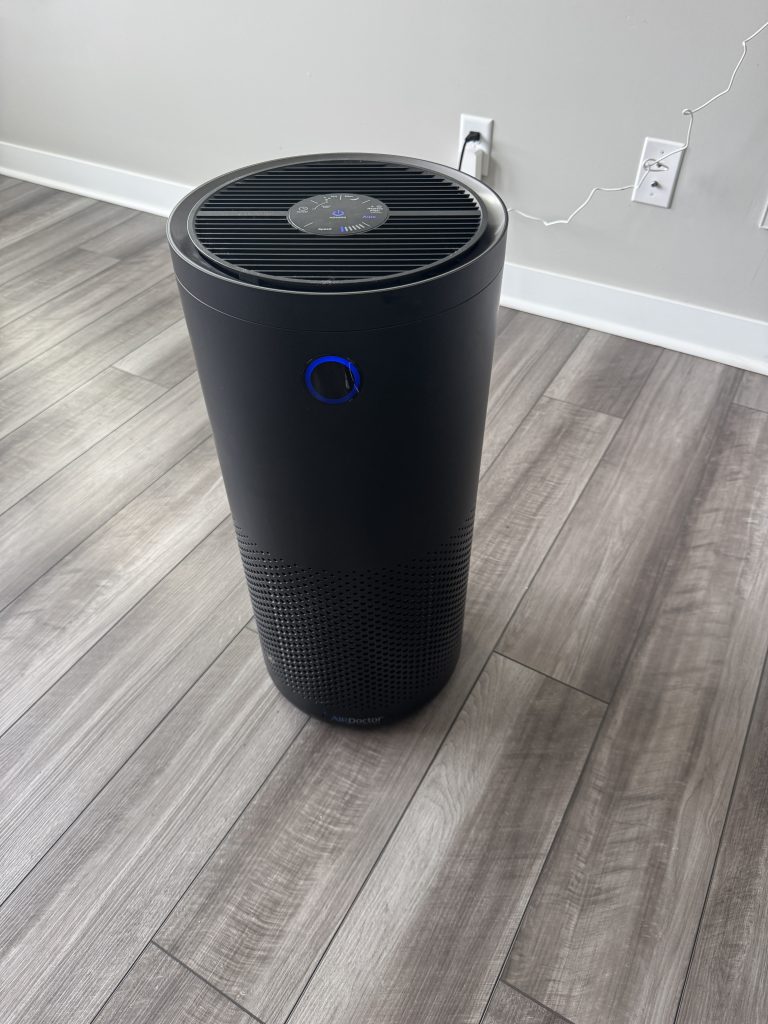
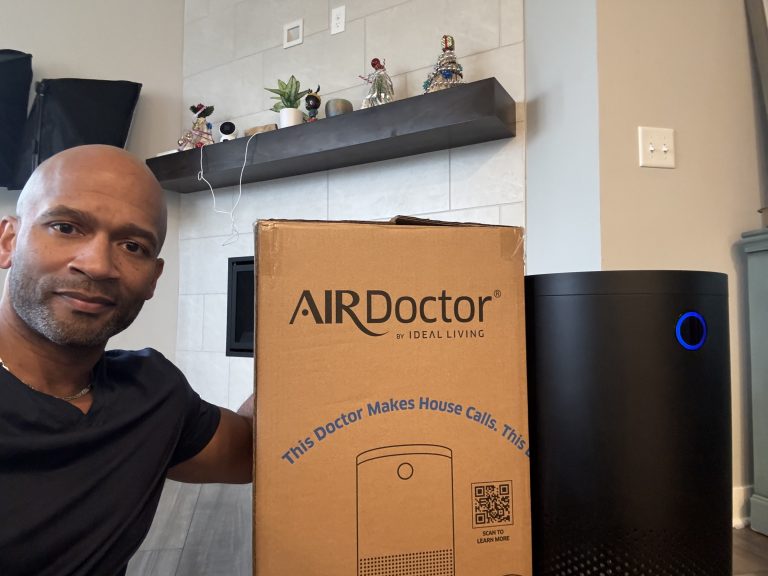
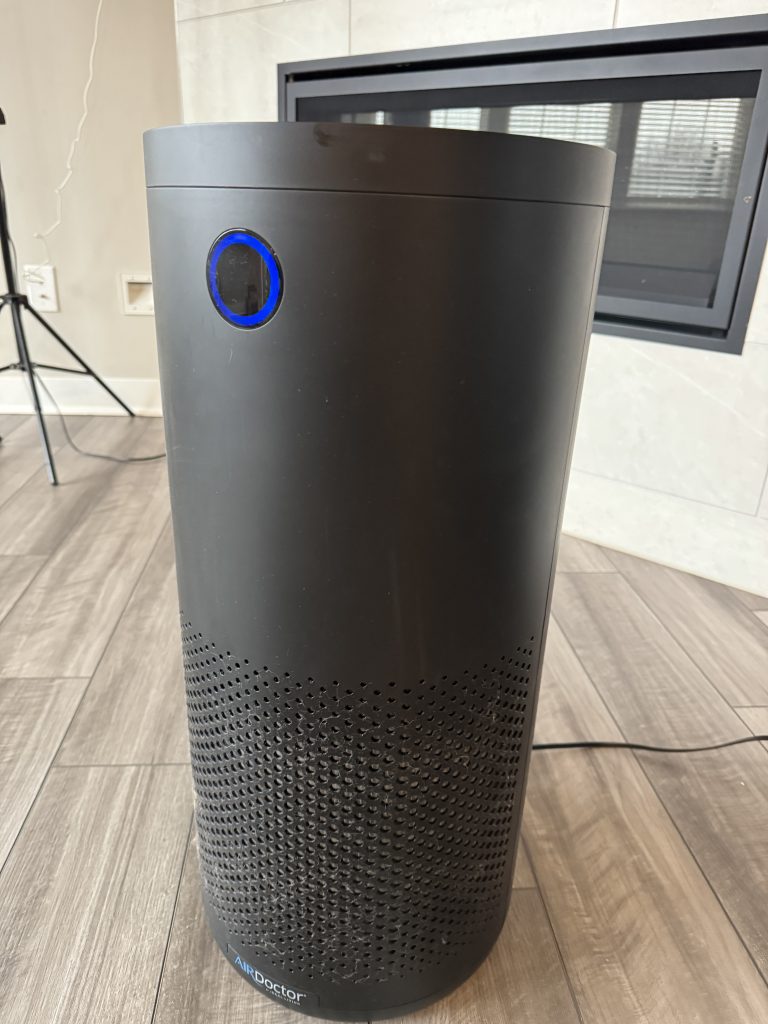
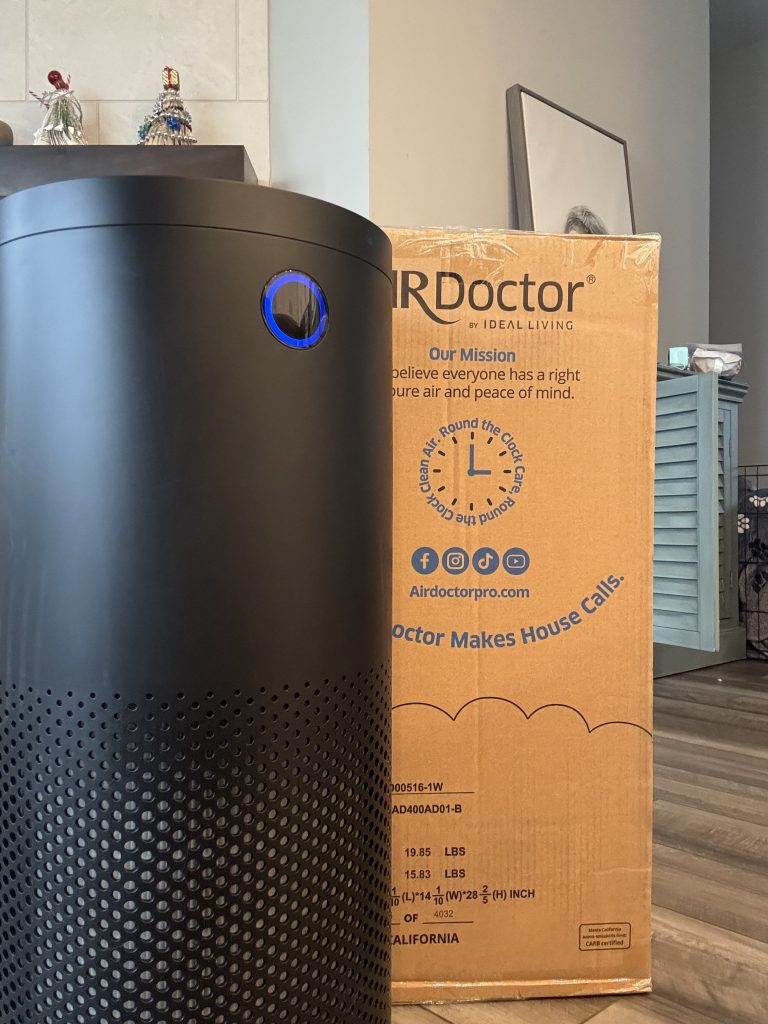
The AirDoctor 4000 is the one I use in my own home, and it’s built for people who want one machine that handles a bigger space without cutting corners. It’s rated for rooms up to 694 square feet at four air changes per hour, which is the frequency researchers recommend for meaningfully reducing airborne allergens.
It runs a three-stage system: a pre-filter for hair and dust, a Carbon/VOC filter for odors and gases, and the UltraHEPA filter, which captures particles as small as 0.003 microns. That’s about 100 times smaller than what a standard HEPA filter is rated to catch, which matters if pollen or pet dander is your main complaint.
Key features:
- 694 sq ft coverage at 4 air changes per hour
- 3-stage filtration (pre-filter, Carbon/VOC, UltraHEPA)
- CADR (smoke): 370 CFM
- Auto mode with built-in air quality sensor
- Optional WiFi app control
Why it’s the pick: if you have a shedding dog, a living room that opens into your kitchen, or allergy symptoms that don’t fully go away even with windows closed, this is the unit built to actually keep up.
Check Current Pricing on AirDoctor 4000
2. AirDoctor 3500: Best for Bedrooms and Medium Rooms
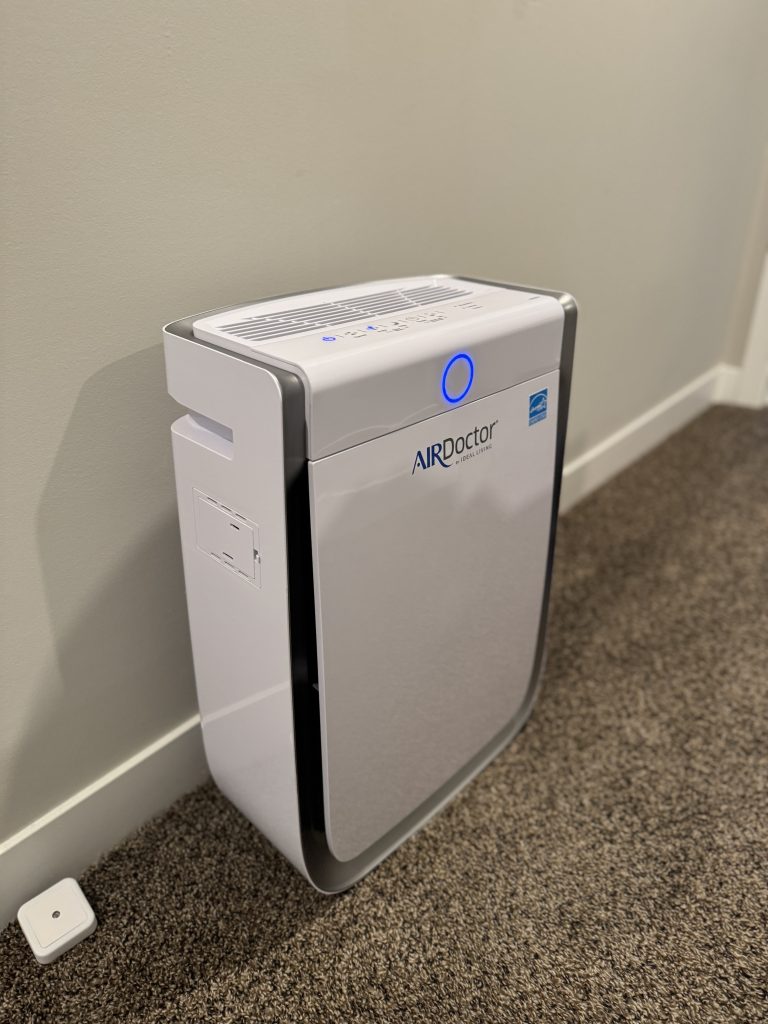
The AirDoctor 3500 uses the same three-stage UltraHEPA filtration as the 4000, just sized for a smaller footprint. It’s rated for 630 square feet at four air changes per hour, which covers most primary bedrooms, home offices, and mid-size living rooms without paying for coverage you don’t need.
On its lower settings it runs around 30 to 40 decibels, which is quiet enough to leave on overnight without it becoming background noise you notice. When it detects something in the air, it ramps up briefly, cleans it, and settles back down on its own.
Key features:
- 630 sq ft coverage at 4 air changes per hour
- 3-stage filtration (pre-filter, Carbon/VOC, UltraHEPA)
- Auto mode with dimmable indicator lights
- Roughly 30 to 40 dB on low, 50 to 67 dB at max fan speed
- Filter replacement runs about $120 a year
Why it’s the pick: if you’re only trying to clean the air in one room, usually the bedroom, this is the AirDoctor model sized right for that job instead of paying more for coverage you’ll never use.
Get 25% Off the AirDoctor 3500
3. LEVOIT Vital 200S-P: Best Smart Purifier for Open Floor Plans
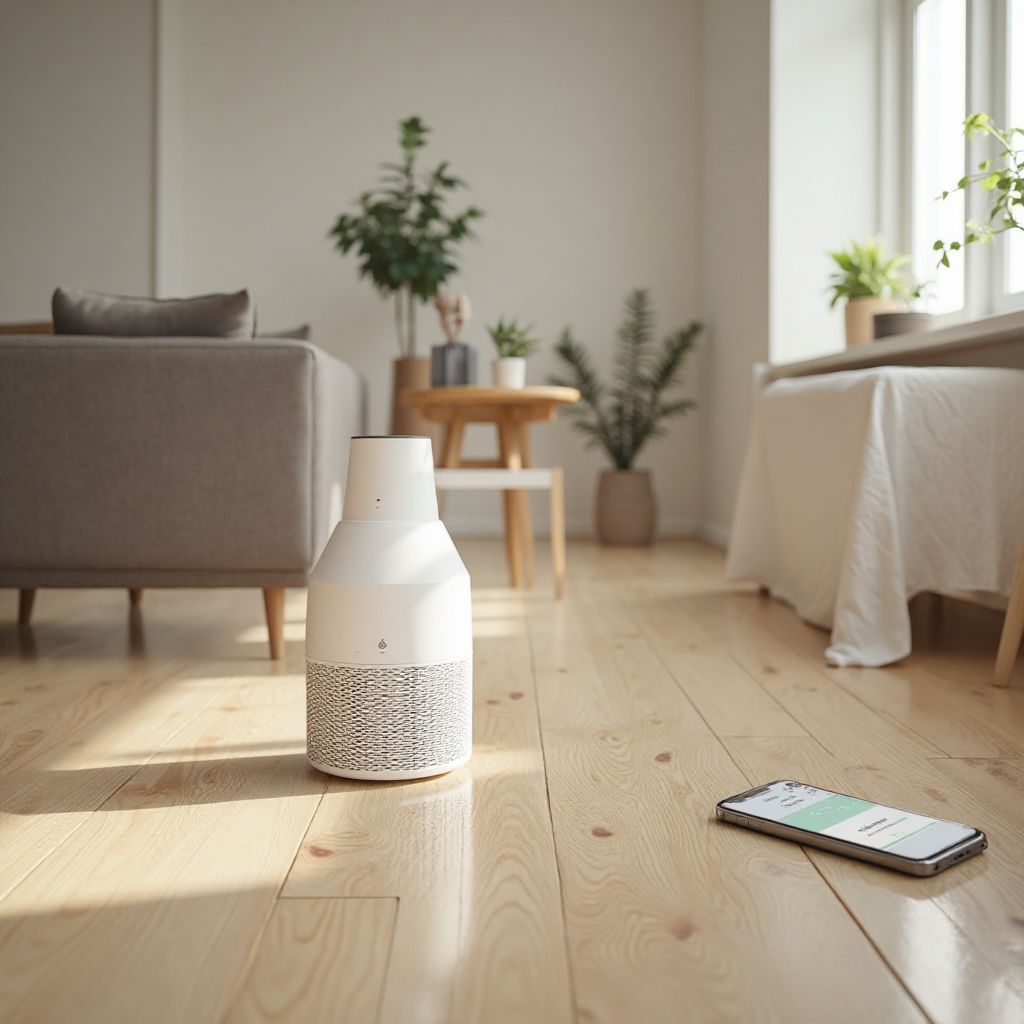
The LEVOIT Vital 200S-P is the smart-home option on this list. It connects through the VeSync app, where you can track filter life, set schedules, and check real-time air quality readings from your phone. It’s AHAM-verified with CADR ratings of 254 CFM for dust, 250 CFM for smoke, and 289 CFM for pollen.
Levoit markets this unit as covering up to 1,875 square feet, but that number is based on a single air change per hour. For a room you’re actually sitting in, plan around roughly 380 to 390 square feet at the recommended five air changes per hour. It’s still a strong option for open-concept living rooms or larger bedrooms.
Key features:
- AHAM-verified CADR: 254 CFM (dust), 250 CFM (smoke), 289 CFM (pollen)
- 3-stage filtration with washable pre-filter
- HEPA-grade filtration confirmed independently in Sleep Mode
- VeSync app control, Alexa and Google Assistant compatible
- U-shaped intake designed to reduce pet hair clogging
Why it’s the pick: if you want app control, scheduling, and real-time air quality data without stepping up to a pricier smart purifier, this is the most feature-complete option here.
4. WINIX 5510: Best for Wildfire Smoke and Household Odor
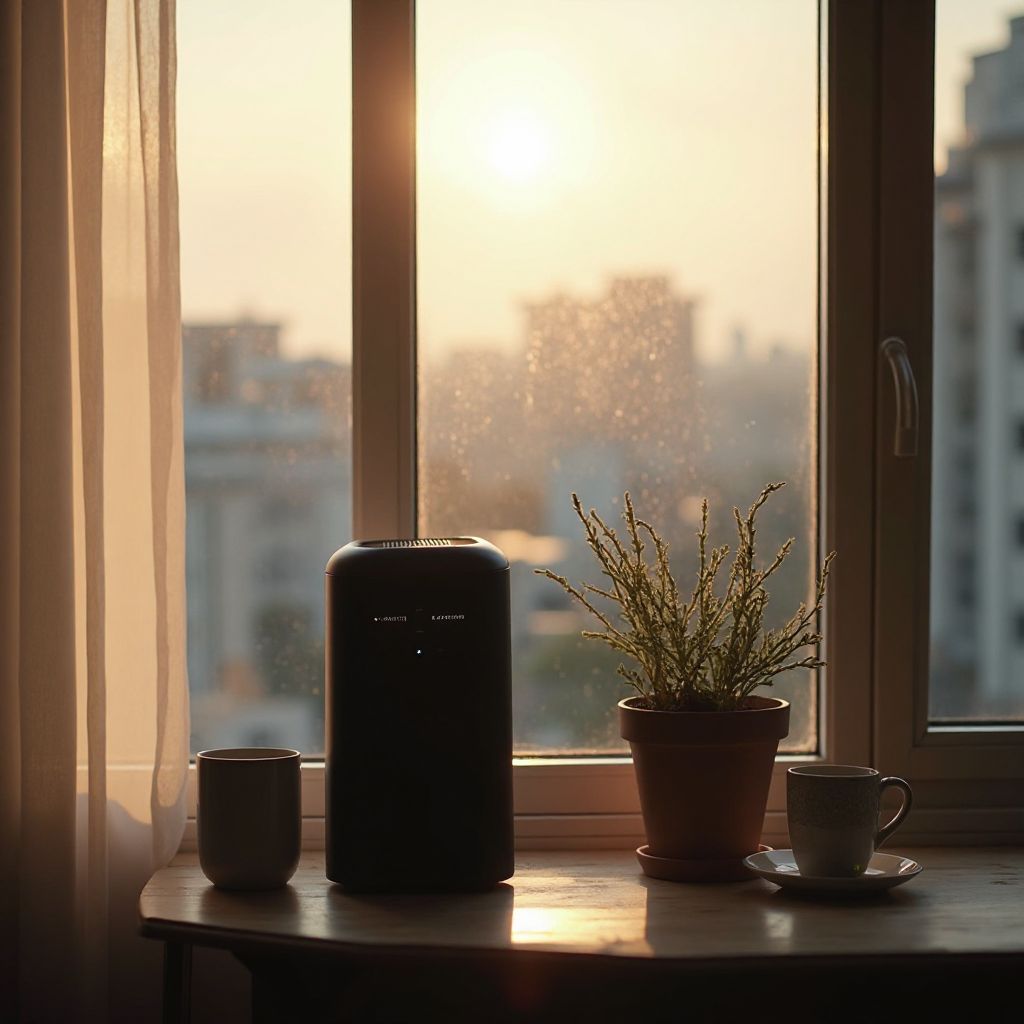
If wildfire smoke is your main concern, the WINIX 5510 earns its spot for one reason: its carbon filter uses actual carbon pellets instead of the thin carbon foam found in a lot of budget purifiers. That matters specifically for smoke and VOC odors, which foam carbon filters tend to struggle with.
It’s AHAM-verified for rooms up to about 392 square feet, with a four-stage system that includes a washable pre-filter, the pellet carbon layer, a True HEPA filter, and Winix’s PlasmaWave technology, which the company states produces no ozone and meets California’s CARB clean air standards.
Key features:
- AHAM-verified coverage: up to 392 sq ft
- 4-stage filtration: washable pre-filter, pellet carbon, True HEPA, PlasmaWave
- CADR (smoke): 253 CFM
- Sleep mode as low as roughly 27 dB
- Replacement filter (Filter Q) runs about $79, swapped every 12 months
Why it’s the pick: for the smoke smell that lingers after a bad AQI week, or ongoing cooking and pet odors, this is the strongest odor performer at its price on this list. For the deeper reasoning on why active filtration matters during smoke events specifically, I covered it in why closing your windows isn’t enough during wildfire season.
5. PuroAir 240: Best Budget Pick for Bedrooms
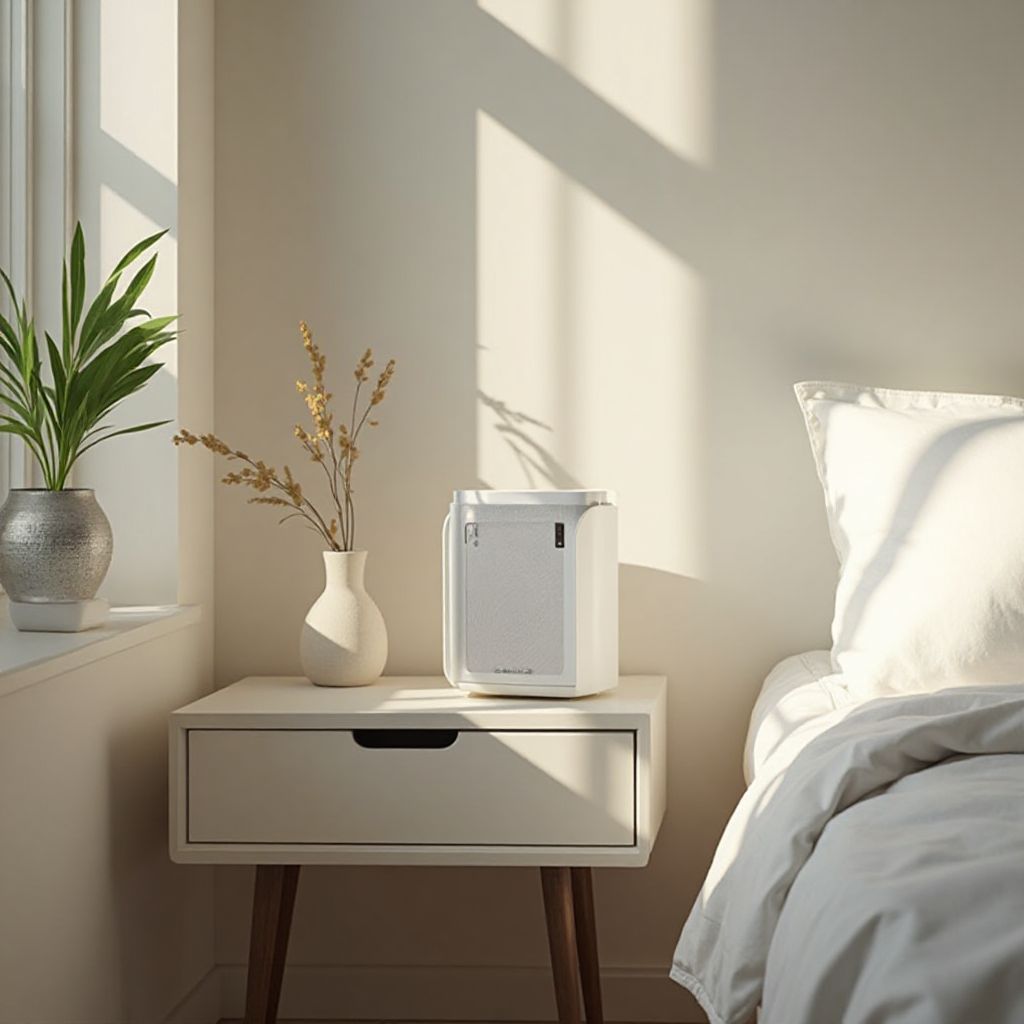
The PuroAir 240 is the most affordable unit on this list, and it doesn’t skip the basics to get there. It runs a three-layer system (pre-filter, HEPA, activated carbon) rated to capture 99.9% of particles down to 0.1 microns, and it’s independently lab-certified through CARB, ETL, ISO, and Energy Star.
PuroAir markets it as covering up to 1,000 square feet, which is a generous claim for a unit in this price range. Treat that as the manufacturer’s best-case number rather than a guarantee for a large open room, and expect stronger results in a single bedroom or home office instead.
Key features:
- Manufacturer-rated coverage: up to 1,000 sq ft
- 3-layer filtration (pre-filter, HEPA, activated carbon)
- Lowest noise setting around 24 dB
- 2-year warranty, with filters typically swapped every 3 to 6 months
- Automatic sensor mode with filter change indicator
Why it’s the pick: if you want a real HEPA purifier for a single room without spending AirDoctor or Levoit money, this is the one that gets you there.
What to Look for Before You Buy an Air Purifier
Room coverage at 4 to 5 air changes per hour, not 1. A lot of manufacturers advertise their biggest possible number, based on cleaning a room only once an hour. Look for the coverage rating at 4 or 5 air changes per hour instead. That’s the number that actually reflects how clean your air will feel while you’re using the room.
A real HEPA or HEPA-grade filter. True HEPA filters are rated to capture 99.97% of particles at 0.3 microns. Some brands market “HEPA-type” or “HEPA-grade” filters that don’t meet that same bar, so check the fine print if this is the main reason you’re buying.
Carbon filtration if smoke or odor is your issue. A HEPA filter traps particles, not gases or smells. If wildfire smoke, cooking odor, or pet smell is what’s bothering you, make sure the unit has a dedicated activated carbon layer, not just HEPA alone.
CADR ratings for the pollutants you actually care about. CADR is measured separately for dust, pollen, and smoke. If allergies are your priority, look at the pollen number. If smoke is the concern, look at the smoke CADR specifically.
Frequently Asked Questions
Do I need an air purifier if I don’t have allergies? If you have pets, cook regularly, live somewhere with seasonal wildfire smoke, or just want a general reduction in indoor dust and odors, a purifier still helps. Allergies are the most common reason people buy one, but they’re not the only one.
How often do I need to replace the filters? It varies by brand and how often you run the unit. AirDoctor filters typically last 6 to 12 months. Winix filters run around 12 months. PuroAir and Levoit filters are usually closer to every 3 to 6 months depending on air quality and daily runtime. Budget for filter replacement as part of the real cost of owning any of these.
Will an air purifier actually help with wildfire smoke? Yes, if it has both a True HEPA filter and an activated carbon layer. HEPA traps the fine particulate matter (PM2.5) in smoke, and carbon handles the lingering smell. A purifier with only HEPA and no carbon layer will clear particles but won’t do much for the smoky odor itself.
Is a louder purifier a more powerful one? Not necessarily. Higher fan speeds are louder on every unit, but auto mode purifiers like the ones on this list only run at their loudest setting briefly when they detect a spike, then settle back down. Look at the low and sleep mode decibel ratings instead, since that’s the setting you’ll actually live with most of the time.
Bottom Line
If you only want one machine and have the budget, the AirDoctor 4000 covers the most ground and handles pet dander, allergens, and general air quality without needing a second unit. If your main concern is wildfire smoke specifically, the WINIX 5510 has the strongest odor and gas performance for the price. And if you’re working with a tighter budget and a single bedroom, the PuroAir 240 gets you real HEPA filtration without the higher price tag.
Whichever one fits your space and budget, the goal is the same: get active filtration running, not just a fan pushing the same air around the room.