

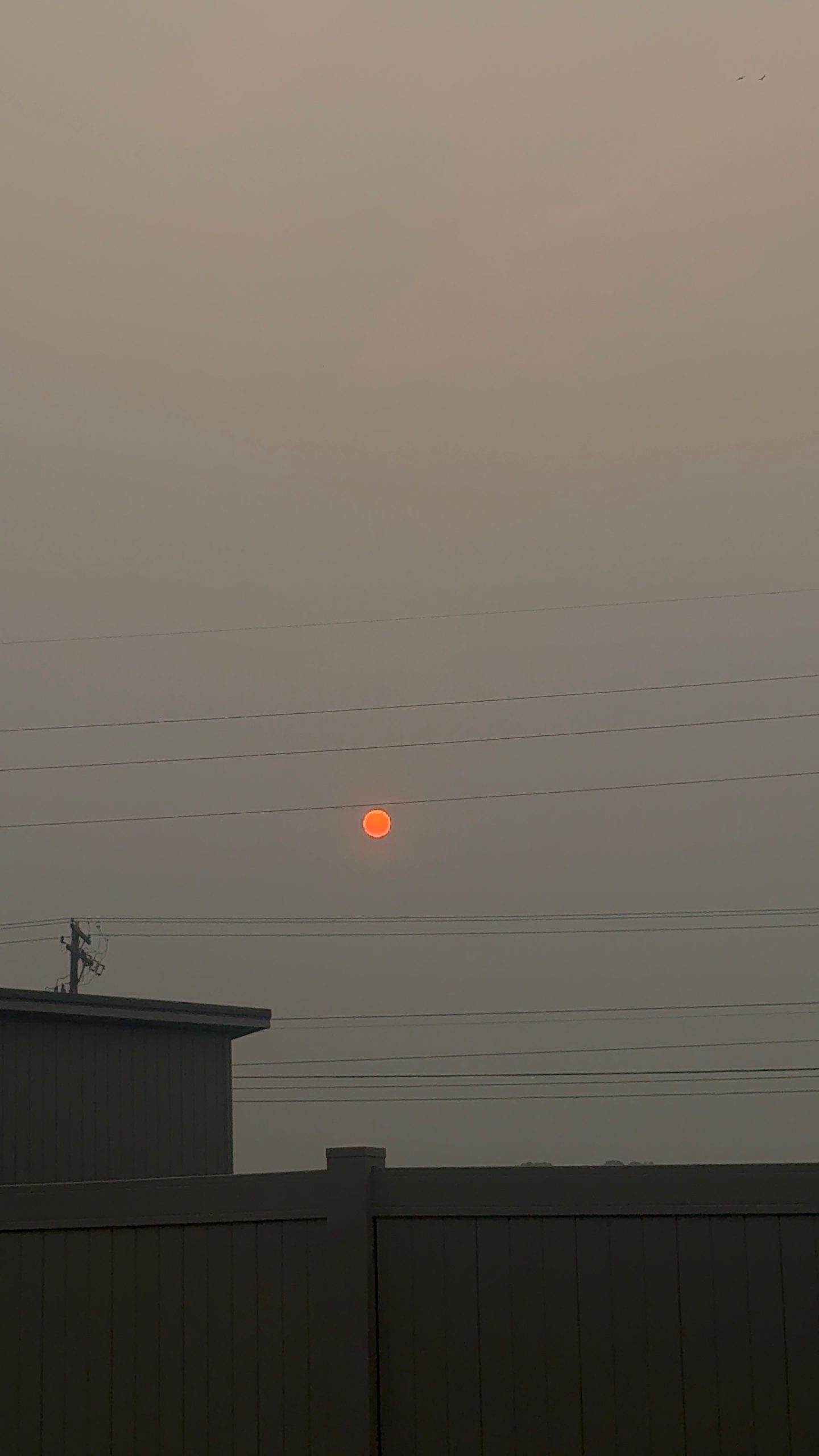
Wildfire Smoke: Why Closing Windows Isn’t Enough (What Actually Works)
This article contains affiliate links. If you purchase through one of these links, we may earn a commission at no extra cost to you. We only recommend products we believe in based on our own research and testing.
If you’re in a wildfire smoke zone right now, you’ve probably heard the standard advice: close your windows, run your AC on recirculate, avoid activities that add more pollution indoors. That’s good advice, and health agencies are right to recommend it during a wildfire smoke event.
But here’s what usually gets left out, and it’s actually critical: closing windows and wearing an N95 mask outdoors won’t protect your indoor air quality if the AQI outside is hazardous.
Why Closing Windows Doesn’t Actually Protect Your Indoor Air Quality
Your local Air Quality Index, or AQI, is spiking. PM2.5, the fine particulate matter in wildfire smoke, is microscopic. These particles slip through cracks in doors and windows, they accumulate on your clothes, and they get recirculated through your HVAC system if you’re not running the right filters. Closing your windows isn’t a seal against wildfire smoke, it’s just a partial barrier.
Right now, cities across the Midwest and Northeast are seeing AQI levels hit 300, 400, even 500, which is hazardous territory by any air quality standard. Wildfire smoke drifting down from Canada isn’t clearing up anytime soon either. So what do you actually do when the standard wildfire smoke advice isn’t enough to protect your indoor air?
What Actually Filters Wildfire Smoke Indoors
You need active filtration inside your home, not just sealed windows. Not a fan, not slightly better HVAC filters, but a real HEPA air purifier built to pull in contaminated air, trap PM2.5 particles, and push clean, filtered air back into your space.
If you’re still breathing smoky air indoors even with your windows shut, that’s the exact gap a HEPA air purifier is built to close. Active filtration does the work that a sealed window physically cannot.
What to Look for in an Air Purifier During Wildfire Season
- True HEPA filtration rated to capture particles as small as PM2.5
- A CADR (Clean Air Delivery Rate) that matches the square footage of your room
- MERV-13 or higher if you’re running filtration through central air, HEPA if it’s a standalone air purifier
- Continuous, automatic operation, not something you have to remember to turn on and off
This is exactly why I’ve been using Air Doctor in my own home during this wildfire smoke event. It’s designed specifically for filtering PM2.5 and other airborne particles. If you want the full breakdown of why this is the air purifier I recommend, I wrote a complete AirDoctor 4000 review covering performance, filter specs, and how it stacks up for allergies and wildfire smoke.
Bottom Line: Protecting Your Indoor Air Quality From Wildfire Smoke
Closing your windows is a good first step, not the whole solution. If you want to actually breathe clean air indoors during wildfire smoke season, active filtration is what closes the gap between hazardous outdoor AQI and safe indoor air. Check out the full AirDoctor 4000 review and see if it makes sense for your space.