Krill Oil Benefits: What It Does and How It Compares
This article contains affiliate links. If you purchase through one of these links, we may earn a commission at no extra cost to you. We only recommend products we believe in based on our own research and testing.
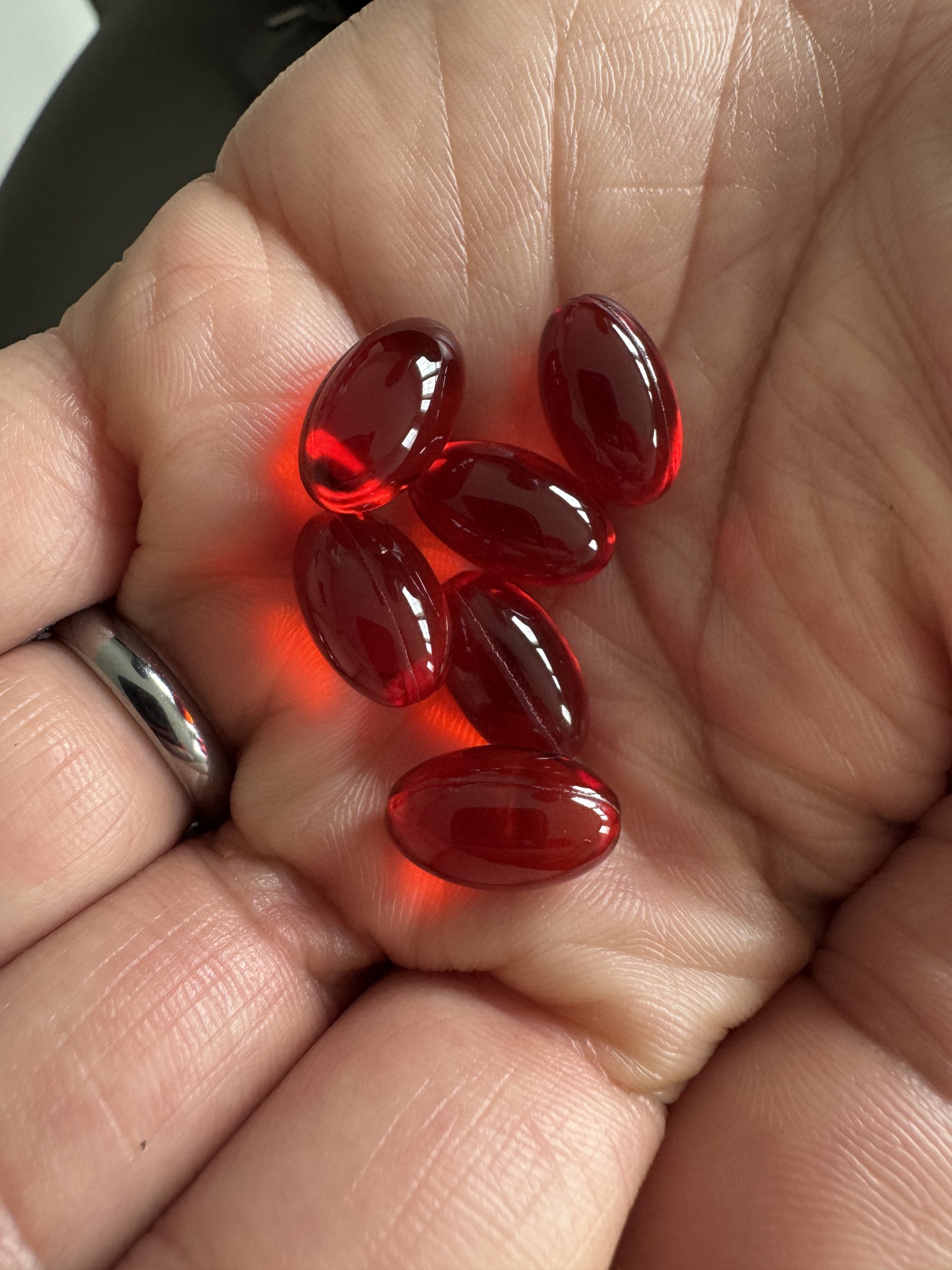
Krill oil is a dietary supplement made from small, shrimp-like crustaceans called Antarctic krill. It contains omega-3 fatty acids attached to phospholipids, plus a natural antioxidant called astaxanthin. Many people see it as an alternative to fish oil. This article breaks down what it contains, how it compares to fish oil, and what to check before you spend more on it.
Quick Summary: What Is Krill Oil?

Krill oil comes from Euphausia superba, a tiny crustacean harvested from the Southern Ocean near Antarctica. It supplies the omega-3 fats EPA and DHA, bound mostly to phospholipids rather than the triglyceride form found in most fish oil. Krill oil is a dietary supplement, not a drug, and it hasn’t been evaluated by the FDA to diagnose, treat, cure, or prevent any disease.
What Is Krill Oil, Exactly?
Krill are tiny, semi-transparent crustaceans that live in massive swarms in the cold waters around Antarctica. They sit near the bottom of the marine food chain and feed on microscopic algae, which is where their reddish color and antioxidant content come from.
Manufacturers harvest krill using regulated fishing methods, then process the catch quickly to extract the oil before it breaks down. That oil is filtered, tested, and put into softgel capsules for sale as a supplement.
Because krill are shellfish-like crustaceans, this matters for anyone with a shellfish allergy, which we cover later in this article.
Key Compounds: Omega-3s, Phospholipids, and Astaxanthin
Krill oil’s main draw is its combination of three things: omega-3 fatty acids, phospholipids, and astaxanthin.
- EPA and DHA: These are the two long-chain omega-3 fatty acids your body can’t make on its own in meaningful amounts. You need to get them from food or a supplement.
- Phospholipids: In krill oil, a large share of the omega-3s are attached to phospholipid molecules instead of triglycerides, which is the form typically found in standard fish oil.
- Astaxanthin: A carotenoid antioxidant that gives krill oil its deep red color. It also helps protect the oil from oxidizing, or going rancid, while it sits on a store shelf.
Krill Oil Benefits: A Nutritional Framing
Krill oil is, at its core, a way to add omega-3 fatty acids to your diet. Like any omega-3 source, it’s meant to support your overall nutritional intake as part of a varied diet, not to replace food or act as a treatment for any condition.
The astaxanthin in krill oil adds antioxidant content. The phospholipid-bound omega-3s also give it a distinct nutritional profile compared to standard fish oil. Some people also prefer krill oil because it typically comes in a smaller softgel with a lower total oil dose per serving.
None of this means krill oil is a medical treatment. It’s a food-based supplement meant to fill nutritional gaps. Follow the serving amount on the label of the product you choose.
Krill Oil vs. Fish Oil: Composition and Absorption Differences
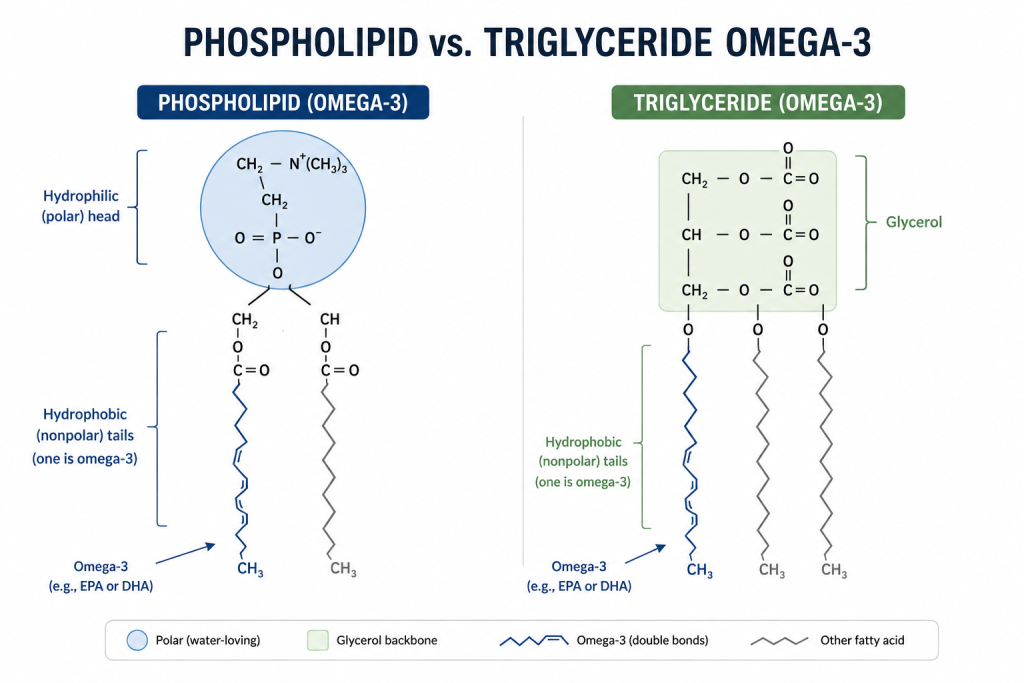
The biggest, most-cited difference between krill oil and fish oil isn’t about which one “works better.” It’s about how the omega-3s are structured and how your body may process them.
Standard fish oil delivers EPA and DHA mostly in triglyceride or ethyl-ester form. Krill oil delivers a large portion of its omega-3s attached to phospholipids instead. Some research suggests phospholipid-bound omega-3s may be absorbed differently by the body. Experts note more study is needed to fully understand what that means in practice.
Krill oil also contains astaxanthin, which fish oil typically does not. Fish oil, on the other hand, usually delivers a higher total amount of EPA and DHA per capsule for a lower price.
That price gap is real and worth understanding before you decide which one fits your routine.
| Factor | Fish Oil | Krill Oil |
|---|---|---|
| Omega-3 form | Mostly triglyceride/ethyl ester | Largely phospholipid-bound |
| Added antioxidant | Not typically included | Contains astaxanthin |
| Cost per 500mg EPA+DHA* | About $0.16 to $0.56 | About $1.38 to $2.60 |
| Source | Various ocean fish species | Antarctic krill (Euphausia superba) |
*Cost figures come from a third-party lab cost analysis and can vary by brand and retailer.
Possible Side Effects and Who Should Be Cautious
The most commonly reported issue with krill oil is a fishy aftertaste, burping, or mild GI upset such as gas, bloating, or diarrhea. Some users describe the smell as stronger than they expected, similar to complaints seen with fish oil products.
Anyone with a known shellfish allergy should be cautious with krill oil, since krill are crustaceans. Allergic reactions have been reported by users trying it for the first time. If you have a shellfish allergy or are unsure, talk with your doctor before adding any krill-based supplement to your routine.
As with any supplement, check the label for a full ingredient list and follow the serving size printed on the bottle. This article doesn’t provide dosage or medical usage instructions beyond what the manufacturer prints on its label.
Sourcing and Sustainability in 2026
Krill sourcing has become a bigger talking point in 2026. The Antarctic krill fishery closed for the season on August 12, 2026, after reaching its 620,000-tonne precautionary catch limit set by the Commission for the Conservation of Antarctic Marine Living Resources (CCAMLR). This marked the second year in a row the fishery closed early.
That closure followed a 2026 United Nations Food and Agriculture Organization report. It rated all 15 assessed Antarctic fish stocks, including krill, as biologically sustainable. The report called the region a benchmark for precautionary fisheries management. One British Antarctic Survey ecologist noted the fishery takes less than 1% of total krill biomass. That meets the FAO’s sustainability standard for the fished stock, though it doesn’t fully account for wider ecosystem effects.
For shoppers, this means krill harvesting operates under a tightly monitored global catch limit. It’s a supply chain and environmental fact, not a claim about how well the supplement works.
What to Look for in a Krill Oil Supplement
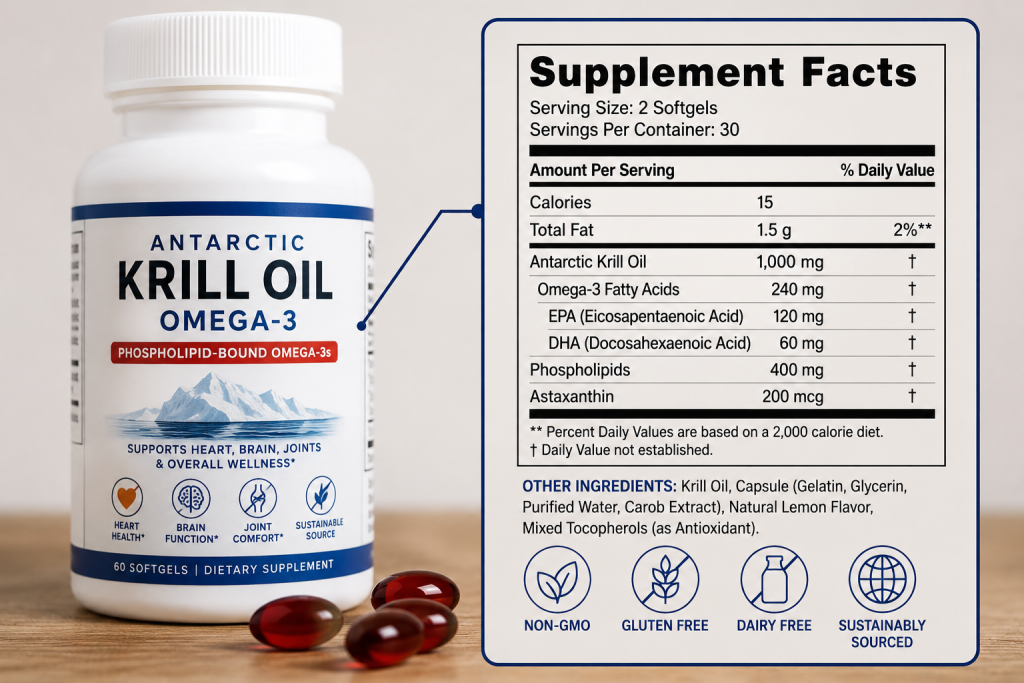
Not all krill oil products are the same, so it helps to know what to check on the label before buying.
- EPA and DHA amount per serving: Compare the actual milligram amount, not just the total oil weight.
- Phospholipid content: Some brands highlight this percentage directly on the label or website.
- Astaxanthin presence: Look for whether it’s listed as a standalone ingredient.
- Sourcing and traceability claims: Brands that disclose their fishing method or certification are giving you more to verify.
- Softgel count and price per bottle: This determines your real cost per serving, which is where krill oil tends to run higher than fish oil.
If you already take a fish oil or omega-3 supplement, compare labels side by side. Check any krill oil product you’re considering before switching.
Our guide to sea moss as another marine-based wellness supplement” to the relevant internal article.
A Closer Look: JayLab Pro Omega Icon Krill Oil
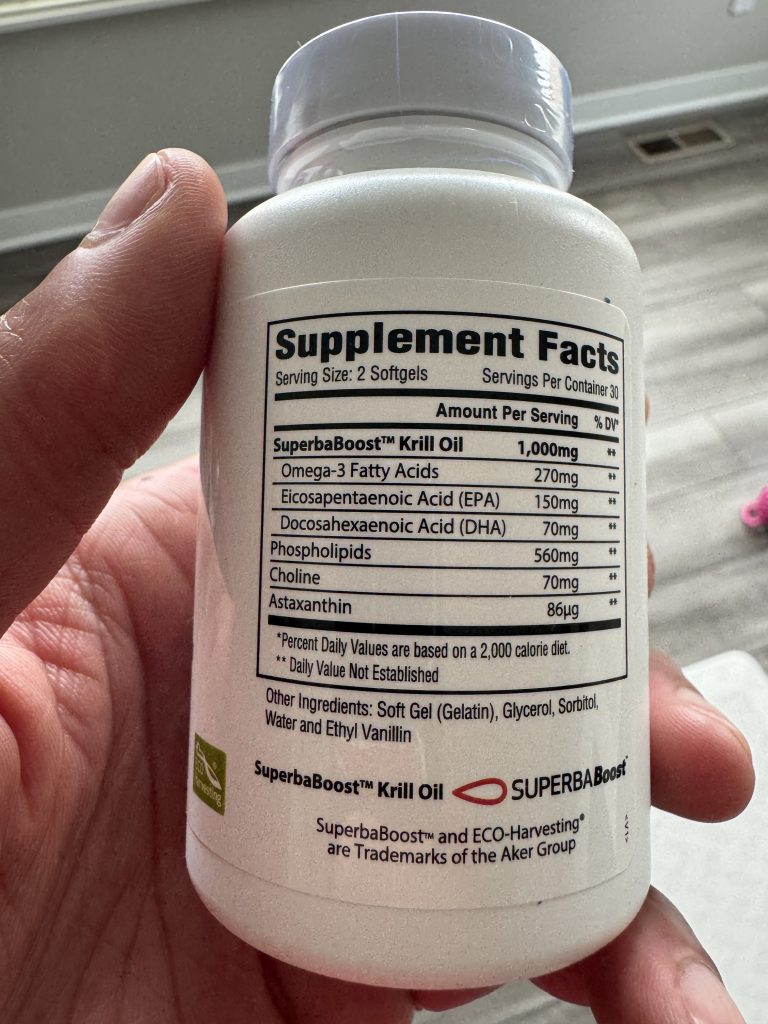
JayLab Pro’s Omega Icon is one krill oil supplement on the market, made from Euphausia superba and marketed under the brand name “Superba Boost.” The product page states its omega-3 fats are mostly attached to phospholipids. The brand says this helps the oil work at the cellular level.
The capsules use an encapsulation process the brand calls “Flexitech” and are labeled non-GMO. The label recommends two softgels a day. The company was founded by Registered Dietitian Jayson Hunter.
JayLab Pro states its krill oil is sourced under sustainability and traceability certification. This lines up with the Antarctic krill fishery’s regulated catch limits described above. As always, confirm the current label claims and certifications directly on the product packaging or official page before buying.
See current pricing for Omega Icon Krill Oil

Price, Value, and Return Policy
Pricing for supplements like this one often changes with rotating offers and multi-bottle bundles. The price you see today may differ from what’s listed elsewhere online. JayLab Pro’s official page describes a 60-day window to return any unused portion of Omega Icon for a refund.
The comparison table above shows a real cost gap between krill oil and standard fish oil. Decide whether the phospholipid-bound omega-3 form and astaxanthin content are worth that premium for your routine.
Check today’s offer on the official JayLab Pro page
Other Options Worth Comparing
If price is your main concern, standard fish oil delivers more omega-3 per dollar. It generally runs $0.16 to $0.56 per 500mg of combined EPA and DHA.
Kirkland Signature Krill Oil from Costco is one of the lower-cost krill options. Containers hold 160 servings at roughly $0.16 per serving, according to one buying guide. Kori Krill Oil is a widely available mainstream brand sold at major retailers for shoppers who want broader in-store access.
Our review comparing MCT oil supplements

FAQ
Is krill oil better than fish oil?
Krill oil and fish oil aren’t identical in composition. Krill oil’s omega-3s are largely bound to phospholipids while fish oil’s are typically in triglyceride form, but this is a structural difference, not proof that one works better than the other.
What does krill oil actually contain?
Krill oil contains the omega-3 fatty acids EPA and DHA, phospholipids, and the antioxidant astaxanthin. Some brands, including JayLab Pro’s Omega Icon, also list choline as part of the formula.
Does krill oil cause fishy burps or a fishy smell?
Some users report a fishy aftertaste, burping, or a noticeable smell when taking krill oil, similar to complaints seen with fish oil. Reactions vary from person to person and by brand.
Is krill oil safe if I have a shellfish allergy?
Krill are crustaceans, and people with shellfish allergies have reported reactions after taking krill oil. Anyone with a shellfish allergy should talk to a doctor before trying it.
Is krill oil sustainably sourced?
The Antarctic krill fishery operates under a CCAMLR-set catch limit and closed early for the 2026 season after hitting that cap. A 2026 FAO report rated the region’s krill stock as biologically sustainable, though scientists note this doesn’t measure full ecosystem impact.
Is krill oil a drug or a dietary supplement?
Krill oil is sold as a dietary supplement, not a drug. It hasn’t been evaluated by the FDA to diagnose, treat, cure, or prevent any disease.
How much does krill oil cost compared to fish oil?
Krill oil generally costs more per dose, running about $1.38 to $2.60 per 500mg of combined EPA and DHA compared to $0.16 to $0.56 for standard fish oil, based on independent lab cost comparisons.
Bottom Line
Krill oil is a legitimate way to add omega-3 fatty acids to your diet. Its phospholipid-bound composition and built-in astaxanthin set it apart from standard fish oil.
It costs noticeably more per dose, and some users report fishy burps or mild stomach upset. That makes it a less practical fit for budget-focused buyers or anyone with a shellfish allergy.
If you want a different omega-3 structure than fish oil and don’t mind paying a premium, a krill oil product like JayLab Pro’s Omega Icon is worth a look. If cost per dose matters most, standard fish oil or a lower-cost krill brand may make more sense.
Compare Omega Icon Krill Oil options here