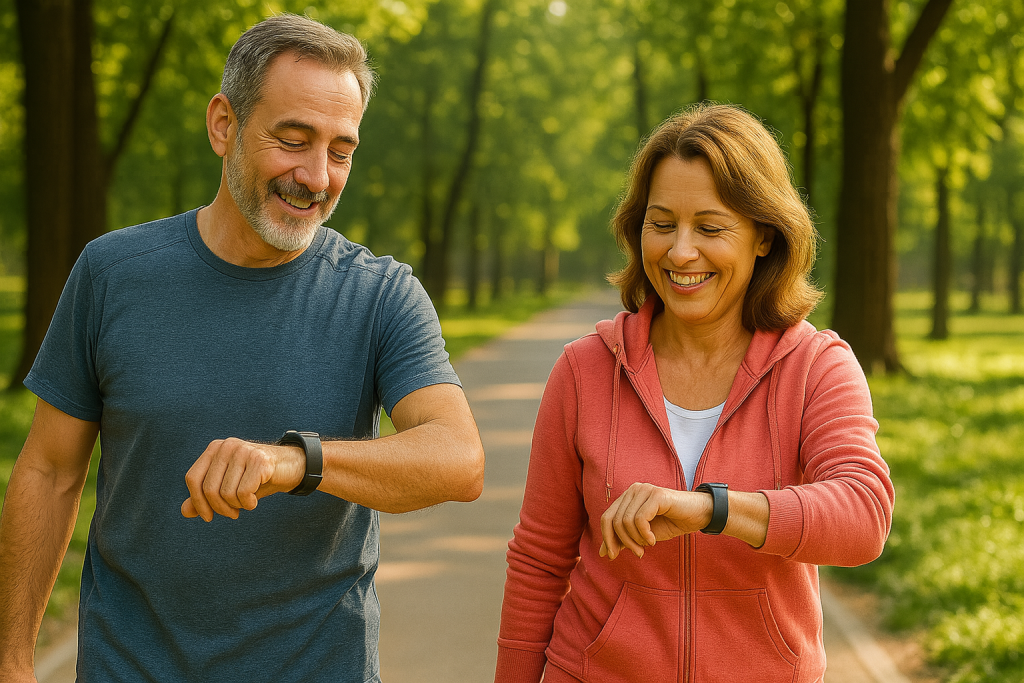

Wearable Technology: Using Fitness Trackers to Manage Weight After 40
Staying active and healthy in our 40s and beyond can feel like walking a tightrope. Work deadlines, caring for our kids, and looking after aging parents often leave little room for self‑care. Wearable technology is one of the top fitness trends for 2025, and it offers a practical way to stay on that tightrope without falling off.
Why wearables are trending
Fitness watches and health trackers are no longer just flashy gadgets for athletes. They collect data on steps, heart rate, sleep and more, making it easier to understand your body. The American College of Sports Medicine lists wearable technology as the number one fitness trend for 2025. These devices give real‑time feedback and help tailor workouts to individual needs. For people over 40 who juggle many responsibilities, this feedback can be a game changer. It helps you stay accountable even when life gets hectic.
Benefits for mid‑life adults
Personalized insights. Wearables track everyday activities—like walking the dog, cleaning the house, or chasing after kids—and convert them into tangible numbers. When you see that your afternoon walk burned 300 calories or that your resting heart rate is lower after a week of consistent sleep, it’s easier to stay motivated. Data‑driven training lets you adjust workouts based on real information. For example, if you learn that you sleep poorly after late‑night work emails, you might set a “digital sunset” to improve sleep quality.
Encouraging movement. The reminder to stand up or hit your step goal feels like a nudge from a supportive friend. Many devices offer guided breathing exercises or quick five‑minute stretches. These small cues help busy parents squeeze in physical activity while waiting at the school pickup line or cooking dinner.
Monitoring overall health. Some wearables track heart rate variability, oxygen saturation and even blood glucose. While these readings aren’t meant to diagnose, they can highlight trends. For example, a consistently high resting heart rate could prompt you to book a check‑up.
Balancing data with real life
Don’t obsess over every metric. It’s easy to get caught up in daily numbers. Instead of focusing on achieving “perfect” steps, use the data as a guideline. If you’ve had a stressful day of zoom meetings, a long walk with your partner may help both of you unwind.
Respect privacy. Wearables collect personal health information. Before syncing an app with your device, read the privacy settings. Limit sharing if the app requests more data than necessary. The goal is to empower yourself, not market your details.
Tips for choosing a device
- Prioritize comfort and battery life. You’ll wear it daily, so it should feel like an extension of your body.
- Look for useful features. Heart rate tracking, sleep monitoring and step counting are basics. If you have specific needs—like tracking menstrual cycles or blood glucose—find a device that supports them.
- Consider compatibility. Make sure the app works with your smartphone and other devices. Syncing with your calendar or food‑tracking app can streamline your wellness routine.
- Read reviews from people in similar age groups. Younger athletes might rave about high‑intensity features, but a busy parent may appreciate simple reminders and long battery life.
Making the most of wearables
Set realistic goals. Aim for gradual improvements instead of dramatic overnight changes. For example, add 500 steps per day each week. Celebrate small wins like meeting your daily move goal for three days in a row.
Use reminders for self‑care. Set alerts to stretch, drink water or breathe deeply. These prompts can break up long periods of sitting and reduce stress.
Share the journey. Wearables often allow you to invite friends or family to a fitness challenge. Creating friendly competitions with spouses or teenage kids can build community and accountability.
Pair technology with mindfulness. While data is useful, it doesn’t replace listening to your body. If you feel exhausted or notice joint pain, give yourself permission to rest. Remember that consistency matters more than perfection.
Humour and encouragement
Don’t worry if your step count dips when you’re busy driving your kids to soccer or helping your parents with errands. You’re still moving, just not in ways a watch tracks. Think of wearables as cheerleaders rather than drill sergeants. They’re there to support you and gently remind you that small actions add up.