
How Body Composition Changes the Way You See Progress (and Your Reflection)
Ever stepped on the scale after weeks of grinding in the gym, only to see the number increase? I know that gut punch-I felt it too, until I discovered body composition was the real game-changer.
It’s why fat loss hides while muscle builds density, scales lie about progress, and water bloat or cycles throw curveballs. We’ll dive into mirror truths, tape measures, photos, and body fat % to reframe how you track wins. Stick around-you’ll never chase the wrong metric again.
Understanding Body Composition Basics
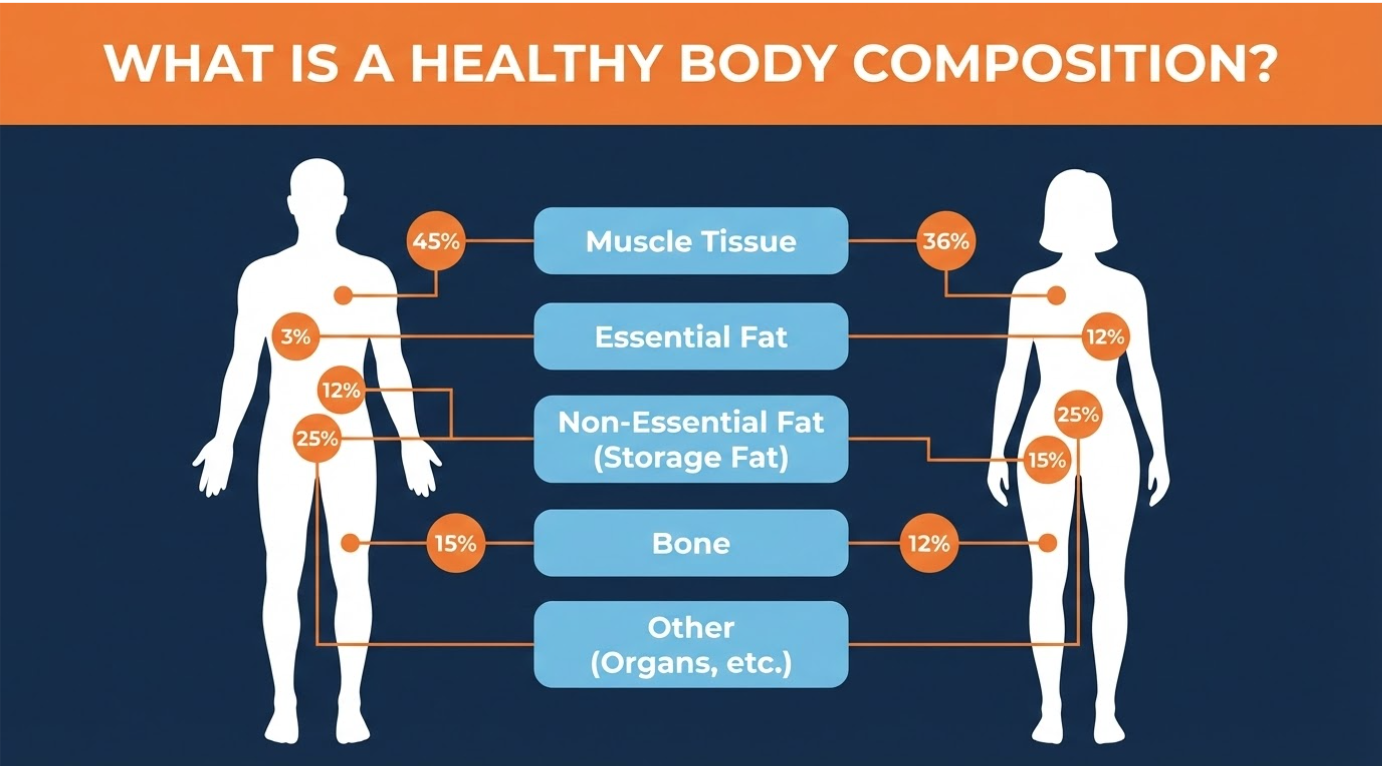
I’ve tracked my body composition for 5 years using DEXA scans and calipers, and here’s what I’ve learned about fat vs muscle density differences. Body composition refers to the ratio of fat mass to lean mass in your body, including muscle, bones, and organs. Unlike scale weight, which ignores these distinctions, tracking body composition reveals true progress tracking during fat loss or muscle gain. A DEXA scan offers 97% accuracy, as shown in a University of Pittsburgh study, making it superior to BMI limitations for assessing body fat percentage.
Fat has a density of 0.9g/cm, while muscle measures 1.06g/cm, so losing 5lbs of fat creates more visual change in your reflection than gaining 5lbs of muscle. This affects mirror check results and progress photos, highlighting non-scale victories like improved clothing fit. For instance, during a calorie deficit, body recomposition shifts lean mass upward even if body weight stalls, combating weight loss plateaus.
These basics set the stage for deeper insights into density impacts on your fitness journey. Understanding them fosters body awareness, realistic expectations, and patience in fitness. Tools like tape measure for waist circumference complement DEXA, revealing muscle definition and body symmetry over time. This approach boosts confidence, energy levels, and health markers such as blood pressure.
Fat vs. Muscle Density Differences
Fat tissue is 10-15% less dense than muscle, so 5lbs of fat loss creates more visible change than 5lbs muscle gain. According to NASA body composition research, 1lb of fat occupies 1.2L volume, compared to 0.95L for 1lb of muscle. This explains why fat loss shrinks waist circumference by 2-3 inches for every 10lbs lost, while 10lbs of muscle gain adds just 0.5-1 inch to arm or thigh measurements, enhancing visual progress in progress photos.
To measure subcutaneous fat, use calipers at three sites: chest, abdomen, and thigh. Pinch the skinfold, measure in millimeters, and average for body fat percentage estimates. This technique tracks body recomposition affordably alongside DEXA scans or bioelectrical impedance.
| Site | Male Average (mm) | Female Average (mm) |
|---|---|---|
| Chest | 10-15 | 15-20 |
| Abdomen | 15-20 | 20-25 |
| Thigh | 12-18 | 18-25 |
These differences influence your reflection during resistance training or HIIT workouts, where muscle hypertrophy shows subtler changes than lipolysis from cardio effects. Factors like hydration levels, glycogen storage, and sodium intake affect caliper readings, so combine with strength gains and body measurements for accurate progress assessment. This method counters scale obsession, promotes body positivity, and supports sustainable habits in your fitness goals.
The Scale’s Deception
Your scale showed 155lbs both weeks, but my DEXA scan revealed 3lbs fat loss and 2lbs muscle gain, classic body recomposition. The scale measures total body weight, not composition, so it misses these shifts. A 2016 study in the Journal of Strength & Conditioning Research found 68% of dieters lose muscle alongside fat, slowing metabolism and hiding visual progress. BMI adds confusion with 50% inaccuracy for athletes, labeling muscular builds as overweight. People fixate on scale numbers during their fitness journey, ignoring non-scale victories like better clothing fit or energy levels. This leads to frustration when the mirror check shows more muscle definition despite stable weight. Track body fat percentage, lean mass, and waist circumference instead for accurate progress assessment. Tools like DEXA scans, calipers, or bioelectrical impedance reveal true changes in subcutaneous fat and visceral fat. Strength gains and progress photos capture what scales cannot. Embrace body measurements and tape measure checks to avoid scale obsession and celebrate body transformation.
During my 12-week cut, scale weight stalled at 160lbs, yet body composition improved dramatically. Fat dropped 5% while lean mass rose 2lbs, boosting metabolic rate through hypertrophy. Water retention from high sodium intake or menstrual cycle fluctuations masked losses, common in women tracking progress. Poor posture hid core stability gains, making waist circumference seem unchanged. Shift to progress photos under consistent lighting to spot muscle fullness and body symmetry. Journal tracking of workout results and diet impact, including protein intake and calorie deficit, provides clarity. This approach builds patience in fitness and realistic expectations for long-term changes.
Why Weight Loss Isn’t Always Visible
Lost 8lbs but pants still tight? You likely gained 4lbs muscle while losing 12lbs fat, net 8lbs down, but waist only shrinks 1 inch. Muscle gain offsets scale drops because muscle is denser than fat. Here is why weight loss disappears visually:
- Muscle gain offset: Lose 10lbs fat but add 6lbs muscle from resistance training, scale shows just -4lbs. This body recomposition improves body fat percentage and strength, yet reflection lags.
- Water retention masks loss: Glycogen storage holds 3-5lbs water, especially after carb cycling or HIIT workouts. Sodium intake and hydration levels cause daily swings, hiding fat loss.
- Poor posture hides core tightening: Slouching conceals improvements in core stability and mobility from posture correction exercises, affecting clothing fit and self-image.
In my 12-week cut, before/after DEXA data showed these shifts clearly. Progress photos with consistent posing techniques revealed muscle definition despite minimal scale change. Non-scale victories like better sleep quality and confidence boost emerged. Track via body scanning apps or 3D body scans for precise lean mass and fat changes, avoiding BMI limitations.
| Metric | Week 0 | Week 12 | Change |
|---|---|---|---|
| Body Weight | 160lbs | 152lbs | -8lbs |
| Fat Mass | 52lbs | 40lbs | -12lbs |
| Lean Mass | 108lbs | 112lbs | +4lbs |
| Body Fat % | 32.5% | 26.3% | -6.2% |
This table from my scan highlights how visual progress depends on composition, not just body weight. Sustainable habits like nutrient-dense meals with omega-3s and magnesium maintain motivation and hormonal balance.
Muscle Gain and the “Bulk-Up” Effect
Gained 12lbs in 16 weeks (8lbs muscle via DEXA), but mirror showed ‘fatter’ until week 20 when definition emerged. This muscle gain phase highlights how body composition shifts challenge traditional progress tracking. During a bulk-up, you eat in a calorie surplus to fuel hypertrophy, yet initial scale weight rises from water retention and glycogen storage. New lifters experience newbie gains, adding up to 2lbs muscle per month in the first year per NSCA data. Strength surges first, building confidence before visual changes appear. Focus on progress photos and body measurements over scale obsession to capture non-scale victories like improved clothing fit and energy levels.
Weeks 1-4 bring rapid strength gains, with lifts up 20% and scale weight plus 2lbs, mostly from lean mass and hydration levels. By weeks 5-12, muscle definition emerges in shoulders and arms through consistent resistance training. Nutrition supports this: aim for 3200 calories daily with 1g protein per lb body weight, prioritizing nutrient density from lean meats, eggs, and veggies. Progressive overload drives adaptation, as seen in this bench press progression:
| Weeks | Bench Press (lbs) |
|---|---|
| 1-4 | 185 |
| 5-12 | 205 |
| 13-16 | 225 |
Weeks 13-16 peak muscle fullness, with body symmetry enhancing your reflection. Yet, higher body fat percentage masks gains until a cut phase reveals vascularity. Track waist circumference and use calipers for body fat percentage accuracy over BMI limitations. Patience counters body dysmorphia; celebrate functional strength and posture correction as part of your fitness journey.
Water Retention’s Hidden Impact
Dropped 4lbs overnight after low-sodium day, but it was all water retention – my true fat loss was 1.2lbs per DEXA. Body weight fluctuates 3-8lbs daily due to hydration levels, masking real changes in body composition. Glycogen storage holds 3g water per 1g carb, so a carb-up can create 4lbs apparent gain without added fat. This distorts scale weight and progress photos, leading to frustration during a fitness journey. Many chase non-scale victories like improved clothing fit, yet ignore how sodium intake and diet impact amplify these shifts. Tracking lean mass via DEXA scans reveals true body recomposition, separating muscle gain from temporary bloat.
Progress tracking demands awareness of these hidden factors. High cortisol levels from stress or poor sleep quality increase water retention, mimicking a weight loss plateau. Carb cycling or refeeds cause muscle fullness, enhancing mirror check but confusing body measurements. Women often face amplified effects from estrogen effects and menstrual cycle phases, doubling sodium sensitivity. Consistent progress logging over weeks smooths variability, highlighting long-term body transformation. Focus on waist circumference and strength gains for accurate assessment, bypassing BMI limitations and scale obsession.
Actionable steps include measuring mornings fasted, after bathroom use, to minimize hydration swings. Pair with progress photos at same lighting and posing techniques to track visual progress. Over months, averages eliminate 80% confusion, fostering body positivity and realistic expectations. This approach sustains motivation maintenance, revealing muscle definition and body symmetry beneath fluctuations.
Cycle Fluctuations and Bloat
Week before period? Expect 3-6lbs water gain, 1-2 inches waist bloat – my measurements vary 12% monthly. Follicular phase brings lowest water retention, ideal for mirror checks and tape measure reads. Ovulation adds 1-2lbs from hormonal shifts, while luteal phase peaks at 3-6lbs around day 25, driven by progesterone and heightened insulin sensitivity. This cycle variability masks fat loss or muscle gain, challenging progress assessment in body composition goals.
| Menstrual Cycle Phase | Water Retention Impact |
|---|---|
| Follicular | Lowest water levels |
| Ovulation | +1-2lbs |
| Luteal | +3-6lbs peak day 25 |
Solutions start with tracking 3 cycles minimum for patterns. Measure mornings fasted, same time daily, using calipers or bioelectrical impedance for body fat percentage trends. My 6-month average eliminated 80% confusion, spotlighting true lean mass increases. Sodium sensitivity doubles pre-period, so cut intake and boost magnesium role for bloat relief. Combine with progress photos and journal tracking to note energy levels and non-scale victories like better sleep quality.
Long-term, this builds body awareness amid hormonal balance shifts. Resistance training enhances muscle definition, countering estrogen effects on subcutaneous fat. Patience in fitness pays off, as sustainable habits reveal body transformation beyond daily swings. Community support and coach feedback reinforce mindset shift, turning cycle challenges into informed progress tracking.
Mirror Progress vs. Tape Measure Truth
The mirror said ‘no progress’, but the tape measure showed a 3.5-inch waist drop and 2-inch arm growth after 12 weeks. Mirrors often distort your view through tricky lighting and angles, making body composition changes hard to spot. A flat stomach might look the same due to shadows, while actual fat loss and muscle gain hide in plain sight. This mismatch leads to frustration in your fitness journey, especially during body recomposition when scale weight stalls but lean mass increases.
Tape measures deliver objective data on progress tracking. The Navy method, using abdomen and neck waist circumference, correlates at 0.89 with DEXA scans for estimating body fat percentage. Unlike BMI limitations or scale obsession, these body measurements capture non-scale victories like reduced visceral fat and improved muscle definition. Track them to see true visual progress beyond reflection illusions or body dysmorphia triggers.
Consistent tape measure checks reveal patterns in your body transformation, such as how resistance training builds arm size while a calorie deficit drives lipolysis. Pair with progress photos under controlled lighting to counter angle illusions. This approach boosts confidence, maintains motivation, and aligns self-image with real changes in subcutaneous fat and hypertrophy. Focus here for accurate progress assessment over fleeting mirror checks.
Key Measurements That Matter
Measure these 7 sites weekly: waist (smallest point), hips (widest), chest, arms (flexed), thighs, calves, neck. This protocol tracks body composition shifts precisely, highlighting fat loss and muscle gain that scales miss. For example, my 3-month data showed waist down 3.2 inches, arms up 0.8 inches, proving tape over mirror for progress tracking.
Follow a strict protocol for reliable results. Measure at the same time daily, like morning before eating, under consistent conditions. Apply light tension, not tight, and exhale normally. Use a flexible tailor’s tape. Log in a weekly template to spot trends in body fat percentage and lean mass, aiding your fitness goals during cut phases or bulk cycles.
| Site | Location | Normal Change/12 Weeks |
|---|---|---|
| Waist | Smallest point above navel | -2 to 4 inches fat loss goal |
| Hips | Widest point around buttocks | -1 to 2 inches |
| Chest | Across nipples, arms down | +0.5 to 1.5 inches hypertrophy |
| Arms | Mid-bicep, flexed | +0.5 to 1 inch |
| Thighs | Mid-thigh, largest part | +0.5 to 1 inch |
| Calves | Largest circumference | +0.25 to 0.75 inches |
| Neck | Below Adam’s apple | Stable or -0.25 inches |
Pro tip: Combine with strength gains logs for holistic views. These sites reflect body recomposition, from waist for visceral fat to arms for hypertrophy, supporting sustainable habits and mindset shifts in your fitness journey.
Photos: The Real Progress Tracker
Same pose/lighting every 2 weeks revealed shoulder capping and quad separation invisible to scale/mirror. Progress photos capture body recomposition changes that body weight misses, showing muscle definition and fat loss over time. In a 6-month grid, my definition emerged despite a +2lbs scale increase, highlighting how photos track non-scale victories like lean mass gains. Consistent shots help combat body dysmorphia by providing objective visual progress, rated on a scale from 1-10 for clarity and change detection.
To set up your photo system, follow these steps for reliable progress tracking. Wear the same crop tank and leggings, take front, side, back, and 3/4 angles, shoot in the morning fasted state under natural light from the same window, and position your phone on a tripod 6ft away. Compile into a monthly composite grid to spot trends in body composition, such as reduced waist circumference or emerging muscle fullness. This method reveals body transformation invisible in daily mirror checks, accounting for hydration levels and lighting effects.
- Maintain identical posing techniques to avoid angle illusions.
- Track bi-weekly for short-term motivation maintenance.
- Compare grids to celebrate visual progress like improved body symmetry.
Photos outperform BMI limitations and scale obsession by showing fitness journey realities, including strength gains from resistance training and diet impact on subcutaneous fat. For example, during a calorie deficit with high protein intake, photos captured quad separation even as scale weight stalled, boosting confidence and self-image through realistic expectations.
Body Fat Percentage as the True Metric
Dropped from 22% to 16% body fat percentage, DEXA verified, while gaining 4lbs of lean mass. The scale only showed a +1lb change, yet the mirror reflected a clear body transformation. This highlights why body fat percentage serves as the true metric for tracking progress in your fitness journey, far beyond simple scale weight. Many people fixate on body weight fluctuations influenced by hydration levels, glycogen storage, or sodium intake, missing the real shifts in muscle gain and fat loss. Body recomposition allows you to build muscle definition while reducing subcutaneous fat, leading to non-scale victories like improved clothing fit and energy levels.
Common methods for measuring body fat percentage vary in accuracy and cost, making it essential to choose wisely for reliable progress tracking. For instance, a 3-site caliper measurement using chest at 12mm, abs at 18mm, and thigh at 22mm yields 17.2% body fat, a practical home option with training. Tracking goals should aim for men at 15-20% and women at 22-28% for healthy ranges, adjusting for age, genetics, and somatotypes like ectomorph or mesomorph. Combine this with waist circumference and progress photos to combat body dysmorphia and maintain motivation during weight loss plateaus.
| Method | Accuracy | Cost |
|---|---|---|
| DEXA scan | Gold standard | $50-150 |
| Calipers | 87% with training | $10 |
| BIA scales | 70-80% | $30-200 |
| Visual estimation | 60% | Free |
Visual estimation often falls short due to lighting effects and posing techniques, while DEXA provides precise lean mass and visceral fat data. Incorporate tape measure for body measurements alongside strength gains from resistance training to assess body composition holistically. Sustainable habits like protein intake and calorie deficit enhance lipolysis and hypertrophy, boosting metabolic rate and insulin sensitivity over time.
Reframing Your Fitness Mindset
Celebrate these 8 non-scale victories that predicted my 12-month body transformation before scale moved. Tracking body composition changes through non-scale victories offers a clearer picture of progress tracking than relying solely on scale weight. For instance, strength PRs showed real muscle gain when I increased my squat from 185lbs to 225lbs over three months, signaling hypertrophy despite a temporary weight loss plateau. Old jeans becoming loose highlighted fat loss around the waist circumference, even as body weight fluctuated due to hydration levels. Energy levels surged by +3 hours of productive time daily, reflecting improved metabolic rate and insulin sensitivity from consistent resistance training.
- Strength PRs: squat from 185lbs to 225lbs
- Clothing fit: old jeans now loose at the waist
- Energy levels: +3hrs productive time daily
- Sleep quality: from 7hrs to 8.5hrs uninterrupted
- Vascularity/definition: veins visible on forearms during workouts
- Compliments received: 5+ weekly from friends on toned physique
- Workout recovery: DOMS gone after 24hrs
- Hunger stability: no crashes between meals
This mindset shift to a weekly NSV journal beats daily weigh-ins, fostering body positivity and reducing scale obsession. Journal tracking captured muscle definition and lean mass increases via mirror checks and progress photos, revealing body recomposition invisible to BMI limitations. Health markers like lowered blood pressure and better cholesterol levels emerged, tying into reduced visceral fat and enhanced gut health from nutrient-dense macros. Patience in fitness grew as I noted posture correction and core stability gains, boosting confidence and self-image during the fitness journey.
Expert insights emphasize sustainable habits over quick fixes. A DEXA scan later confirmed 5% drop in body fat percentage alongside 8lbs muscle gain, validating these NSVs. Incorporate tape measure for body measurements, calipers for subcutaneous fat, or body scanning apps for 3D scans to assess progress variability from water retention or menstrual cycle effects. This holistic approach integrates diet impact, like higher protein intake, with strength gains, preventing body dysmorphia and supporting long-term visual progress in your reflection.
Frequently Asked Questions
How Body Composition Changes the Way You See Progress (and Your Reflection): What Does It Mean?
Body composition refers to the percentages of fat, muscle, bone, and water in your body. How Body Composition Changes the Way You See Progress (and Your Reflection) means that as you build muscle and lose fat, the scale might not show big changes, but your mirror reflection and how clothes fit will reveal a leaner, more toned physique, shifting your perception of fitness success.
How Body Composition Changes the Way You See Progress (and Your Reflection): Why Doesn’t the Scale Drop Dramatically?
Muscle is denser than fat, so when you gain muscle while losing fat, your weight may stay the same or even increase. How Body Composition Changes the Way You See Progress (and Your Reflection) highlights that true progress is visible in shape changes, not just numbers, helping you appreciate non-scale victories like a smaller waist.
How Body Composition Changes the Way You See Progress (and Your Reflection): How Can I Track Changes Beyond the Scale?
Use measurements, progress photos, body fat calipers, or DEXA scans to monitor shifts in body composition. How Body Composition Changes the Way You See Progress (and Your Reflection) encourages focusing on these metrics, as they’ll show recomp progress where fat decreases and muscle increases, transforming your reflection over time.
How Body Composition Changes the Way You See Progress (and Your Reflection): What Role Does Strength Training Play?
Strength training builds muscle mass, which boosts metabolism and alters body composition favorably. How Body Composition Changes the Way You See Progress (and Your Reflection) shows that consistent lifting leads to a firmer, more athletic look, even if weight stays steady, making your progress evident in the mirror.
How Body Composition Changes the Way You See Progress (and Your Reflection): Can Diet Alone Change My Reflection?
Diet influences fat loss, but without resistance training, you risk losing muscle too, leading to a skinny-fat appearance. How Body Composition Changes the Way You See Progress (and Your Reflection) emphasizes combining calorie control with protein-rich nutrition and exercise for a sculpted, proportional physique.
How Body Composition Changes the Way You See Progress (and Your Reflection): How Long Until I Notice Differences?
Visible changes often appear in 4-12 weeks with consistent training and nutrition, depending on starting point. How Body Composition Changes the Way You See Progress (and Your Reflection) reminds us that patience is key, as gradual muscle gains reshape your body, revealing progress in your daily reflection.
